
Last updated September 10, 2026
Full 25-point door and opener safety check with every visit - springs, cables, rollers, tracks, and your LiftMaster or Chamberlain opener included
You get a price before we start. It does not change when the truck arrives.
 Before
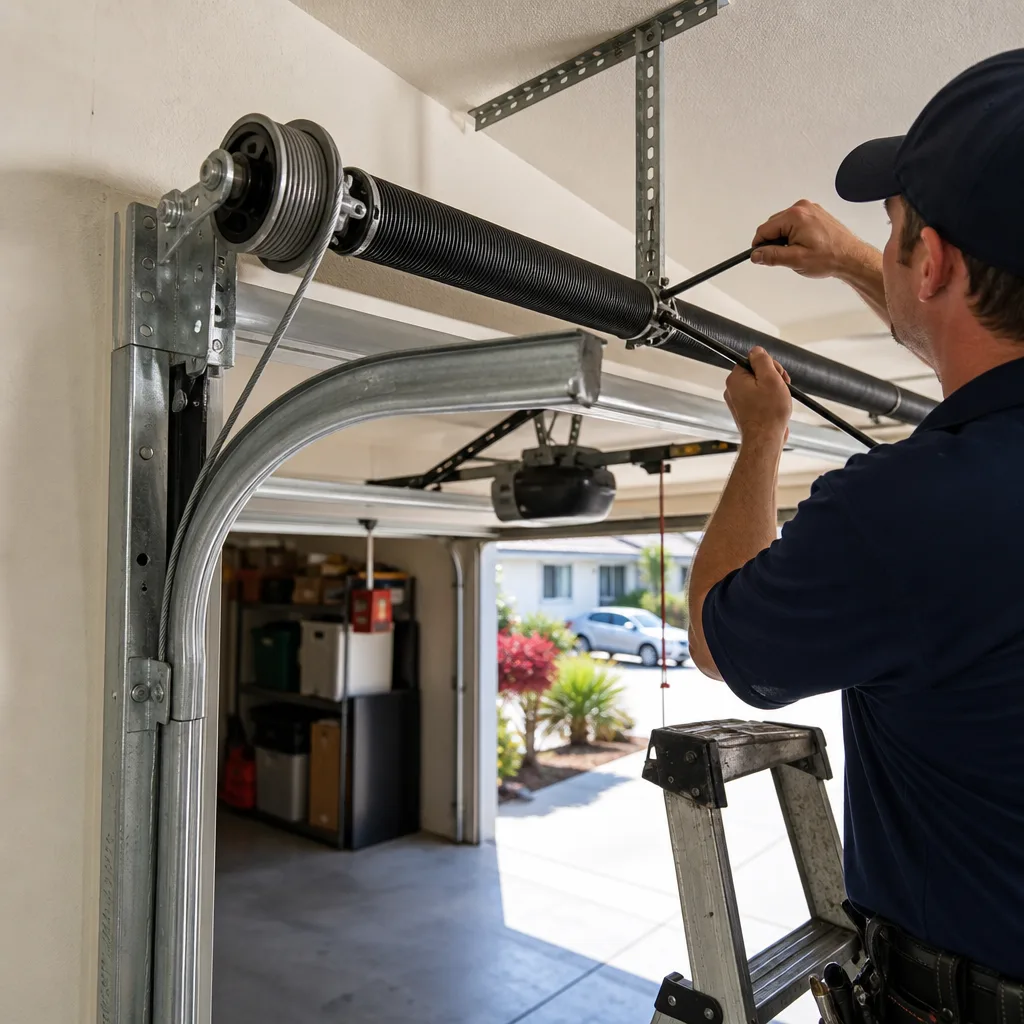 After
After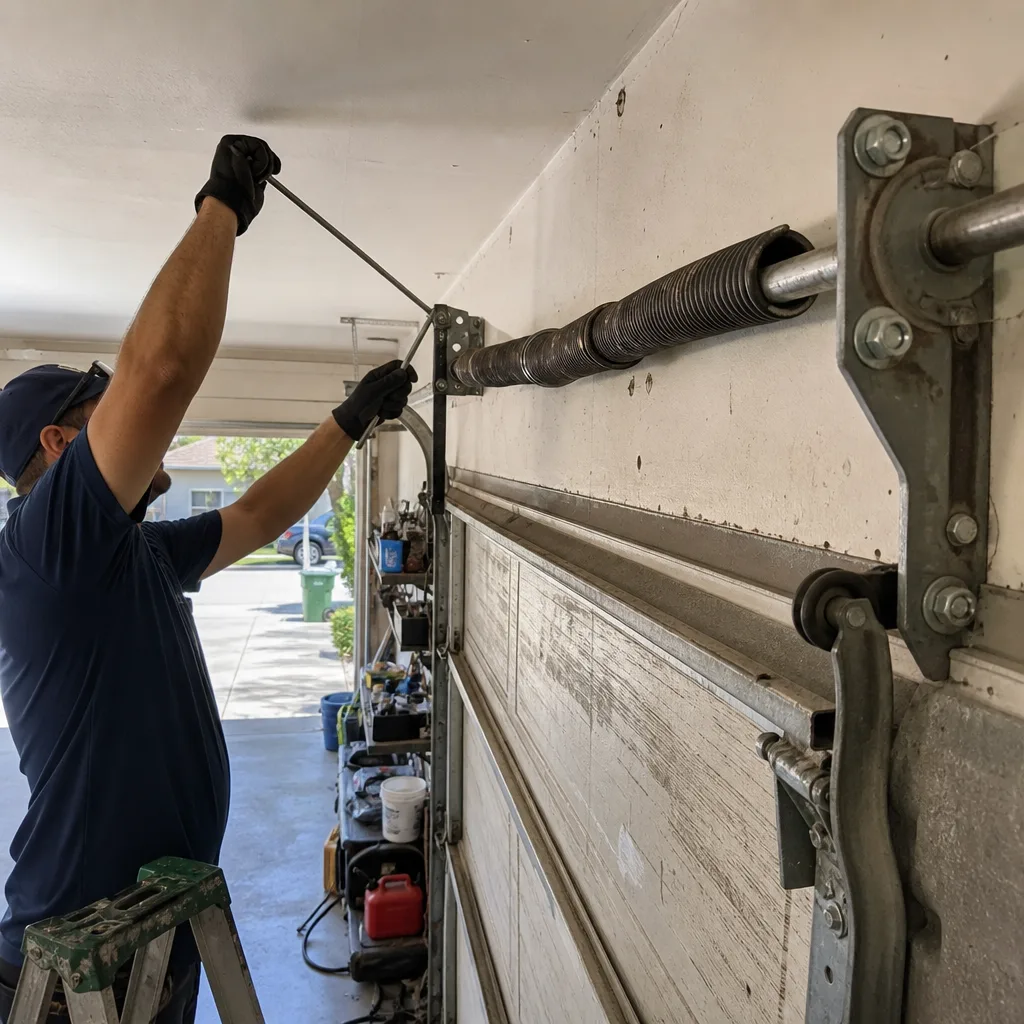 Before
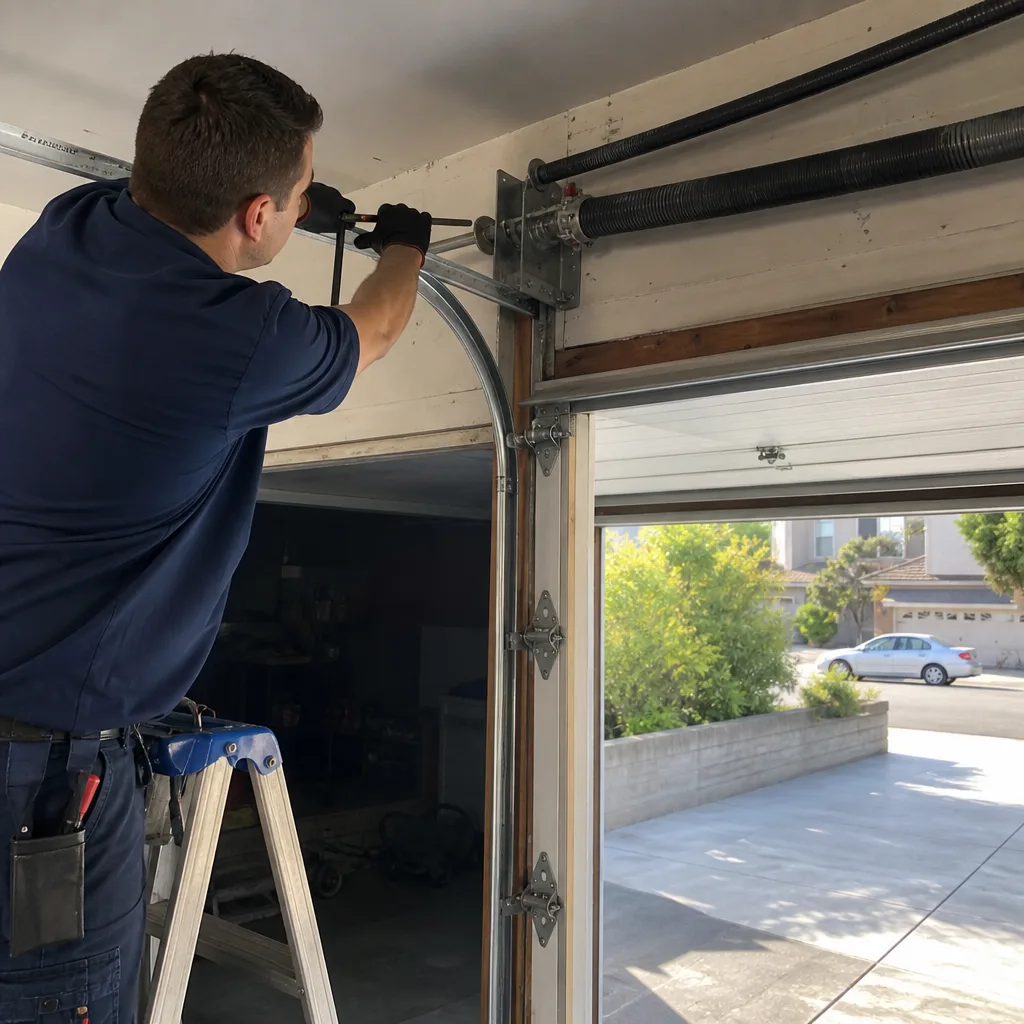 After
After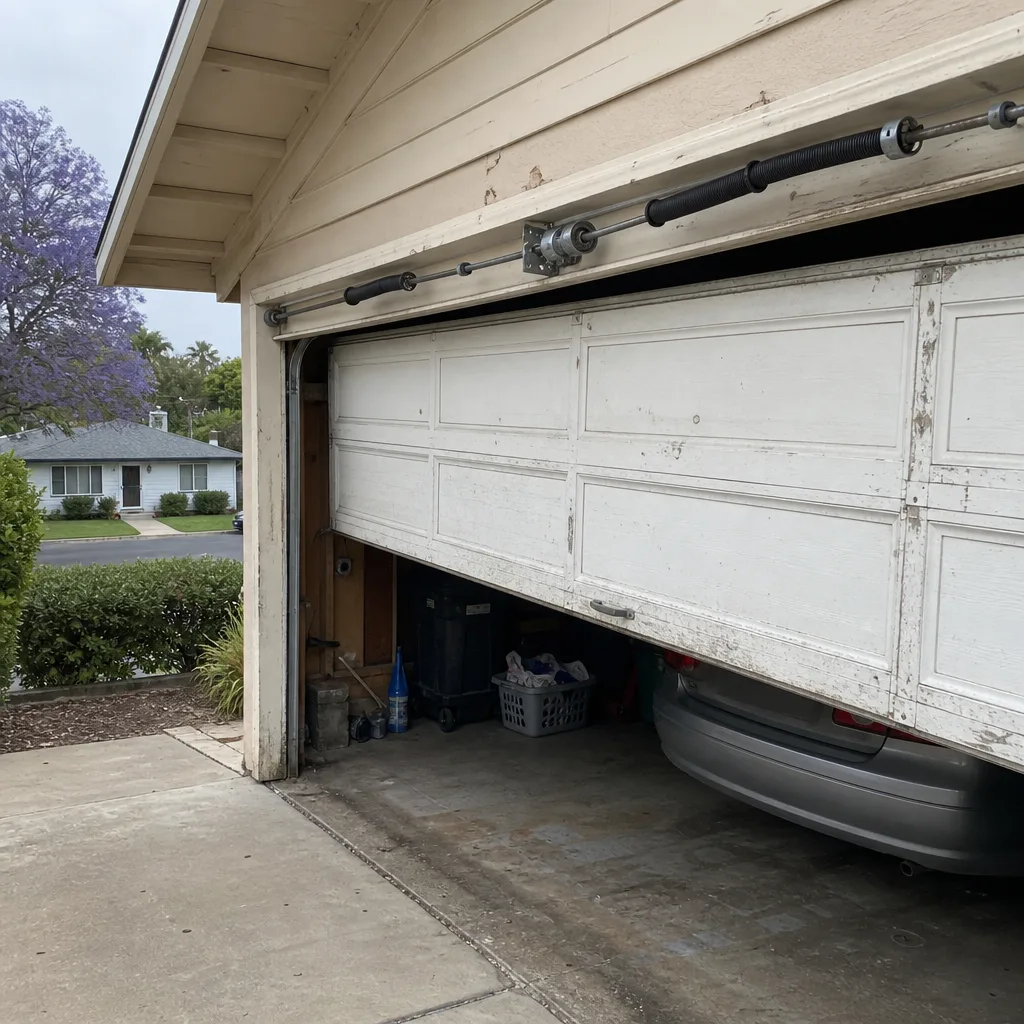 Before
 After
AfterGarage Door Permits, Codes & Inspections in CA: What You Need to Know
A La Mesa homeowner sold her house last spring and found out at the title company that a door replacement done three years earlier required a permit because the contractor moved the opening. The buyer’s lender flagged it, the deal nearly fell through, and she paid $4,200 to retroactively permit work she had already paid someone else to do. That’s not a rare story. It happens in San Diego County more often than anyone wants to admit, and it almost always starts the same way: someone assumed a garage door swap never needs a permit. Most of the time, they’re right. The other 20% is where the trouble lives.
This guide draws the line clearly. You’ll learn which jobs trigger a permit under California Building Code, what La Mesa’s Building Division actually checks during an inspection, how Title 24 energy rules affect insulated doors on attached garages, what the Contractors State License Board says about who pulls the permit, and how to check whether a prior owner did unpermitted work before you buy. By the end, you’ll know exactly which side of the line your job falls on.
Quick Answer
Most like-for-like garage door replacements in California do not require a permit. A permit becomes necessary when the opening changes size, when structural header work is involved, when the door is on a firewall between the garage and living space, or when the garage is part of conditioned space covered by Title 24 energy code. In La Mesa, those permits go through the City of La Mesa Building Division, and the homeowner is ultimately liable if the work was never permitted.
Table of Contents
- The 4 Triggers That Turn a Simple Swap Into a Permitted Job
- How La Mesa’s Building Division Actually Processes a Garage Door Permit
- Title 24 and Insulated Garage Doors: The Quiet Requirement
- Who Pulls the Permit: Contractor or Homeowner? What the CSLB Says
- How to Check If a Prior Door Replacement Was Ever Permitted
- Fire-Rated Doors and Attached Garages: The Code Most People Miss
- What La Mesa Garage Door Permits Cost and How Long They Take
- Common Mistakes to Avoid
- When to Call a Professional
- Frequently Asked Questions
- The Bottom Line
The 4 Triggers That Turn a Simple Swap Into a Permitted Job
Under the California Building Code, replacing a garage door with a new one of the same size in the same opening is classified as a repair or like-for-like replacement. No permit. That covers probably 80% of the residential jobs we see in La Mesa. The door comes out, the new one goes in, the tracks get swapped, and nobody needs to file anything. But the code is specific about what breaks that exemption, and here is where homeowners get surprised.
Trigger 1: You Change the Opening Size
If the new door is wider or taller than the old one, the rough opening has to be enlarged. That means cutting into wall framing, possibly relocating a support post, and reengineering the header above the opening. This is structural work. The Building Division treats it the same way they treat a room addition, because altering the load path of any wall changes how the roof weight transfers to the foundation. In La Mesa, where many homes date from the 1950s and 1960s with original framing, an enlarged garage opening on an older home often requires an engineered plan before they will even review the permit application.
Trigger 2: The Header Needs Work
Even if the opening stays the same size, a rotted or undersized header that needs replacement or reinforcement counts as a structural modification. The header is the beam that carries all the weight above the garage door opening. If it is sagging, cracked, or the original was a 4×6 when current code calls for a 4×12 or larger for the span, the repair triggers a permit. We see this most often in the older La Mesa neighborhoods around Jackson Drive and Normal Avenue, where cedar headers from the original build have sat damp for sixty years. A sagging header is not a door repair. It is a structural event.
Trigger 3: The Door Is on a Fire Wall
In any attached garage, the wall between the garage and the living area is a one-hour fire-rated assembly. The door that lives in that wall plays a role in the rating, even though the garage door itself is not fire-rated. What matters is the frame, the seals, and the self-closing hardware. If a replacement involves modifying that wall or the opening in a way that compromises the fire separation, the Building Division wants to review it. More on this below in the firewall section.
Trigger 4: The Garage Is Conditioned Space
If your garage is heated, cooled, or otherwise conditioned as living or work space, the door falls under California’s Title 24 energy code. That code sets insulation and air-sealing requirements for the door assembly, and a like-for-like swap does not get a free pass. You need a permit and a compliance check. This one quietly became enforceable on attached garages that share a wall with the house, and most homeowners in La Mesa have no idea the rule exists.
How La Mesa’s Building Division Actually Processes a Garage Door Permit
La Mesa is its own incorporated city, which means it runs its own Building Division through the Community Development Department. You are not filing through San Diego County. The City of La Mesa Building Division is located on Allison Avenue, and residential permits are handled at the counter, not through a third-party service.
Here is the typical process for a garage door permit that involves structural or fire-wall work:
- Prepare a basic plan or description. For most residential garage door permits, La Mesa wants a simple site plan showing the garage location and a description of the work, including door dimensions, materials, and whether the opening is changing. For structural header work, you may need a signed plan from a California-licensed engineer or architect.
- Submit the permit application. You file in person or through the city’s online portal. Expect to provide the property address, parcel number, your name as property owner, and a description of the work that matches what the inspector will later see.
- Pay the permit fee. La Mesa calculates residential permit fees based on the valuation of the work. A straightforward garage door structural permit typically runs $200 to $600 in fees, depending on whether plan review is required. We go into fee ranges below.
- Complete the work. The door goes in, the framing is repaired or modified per the approved plan, and the job is ready for inspection.
- Schedule the inspection. La Mesa requires an inspection for any permitted structural work. The inspector checks that the work matches what was approved: header size, fastener schedule, fire-wall treatments if applicable, and final door operation.
- Receive final sign-off. The inspector signs the permit card or records the final in the city’s system. That sign-off is your proof the work is legal. Keep it in a folder with your house records. When you sell, this piece of paper can be worth thousands.
One thing worth knowing: La Mesa’s inspectors are practical people. They are not looking to fail homeowners for a missing sticker. But they will flag structural work that deviates from the approved plan, and they will not sign off on a header that is undersized or a fire wall that got compromised. If you are working with a contractor who has pulled permits in La Mesa before, the process usually goes smoother because they know what the inspectors look for.
For a like-for-like door replacement with no structural or fire-wall involvement, there is no permit to pull and nothing to inspect. You choose the door, it goes in, done. Related reading: our Garage Door Repair in La Mesa page walks through what a standard replacement involves, including timelines and what to expect from start to finish.
Title 24 and Insulated Garage Doors: The Quiet Requirement
California’s Title 24, Part 6 is the state’s energy code. It sets mandatory requirements for the thermal performance of building components in conditioned space. For years, garage doors on unconditioned garages were exempt. That changed in practice as more La Mesa homeowners converted garages into workshops, home gyms, and living rooms. The moment a garage becomes conditioned space, the door becomes part of the building envelope, and Title 24 applies.
Here is the rule in plain terms: if the garage is insulated, heated, cooled, or otherwise part of the conditioned area of the house, the garage door must meet the same U-factor requirements as an exterior wall. For most residential doors, that means an insulated door with a thermal break, proper perimeter weatherstripping, and attention to air infiltration at the head, jambs, and bottom seal.
The practical effect in La Mesa is that an insulated Clopay or Amarr door on a conditioned garage often meets the requirement out of the box, while an older or cheaper door does not. But the permit still matters, because Title 24 compliance is enforced at the building permit stage, not at the door stage. If you live in a neighborhood like Lake Murray or Grossmont where garage conversions are common, this is a rule worth knowing before you swap a door.
For a deeper look at a full door replacement, our Garage Door Installation in La Mesa page covers the replacement process, including how we evaluate existing framing, track systems, and insulation.
Who Pulls the Permit: Contractor or Homeowner? What the CSLB Says
The Contractors State License Board is the state agency that licenses and regulates contractors in California. The CSLB’s position on permits is clear: the contractor is responsible for pulling any permit required for the work they are contracted to perform, unless the contract specifically assigns that responsibility to the homeowner. The CSLB code is explicit that a contractor cannot perform unpermitted work simply because the homeowner asks them to.
But here is the part that catches people: even when the contractor pulls the permit, the permit belongs to the property. The liability for unpermitted work ultimately sits with the homeowner, because the homeowner owns the improvement. If a contractor fails to pull a required permit, the CSLB can discipline the contractor. The city can also file a notice of violation against the property. But when a home goes up for sale and the buyer’s lender flags unpermitted work, it is the seller who pays to fix it. The $4,200 La Mesa homeowner from the opening of this guide did not get reimbursed by the contractor who skipped the permit. She paid it herself at the title company because the house was hers.
What this means in practice: when you hire someone for a garage door job that involves structural work, put the permit responsibility in writing. A one-line sentence in the contract that says the contractor is responsible for obtaining all necessary permits and inspections takes thirty seconds to add and removes ambiguity later. If a contractor tells you a permit is not needed and you are not sure, call the City of La Mesa Building Division yourself, or read our guide on How to Hire a Garage Door Contractor in La Mesa: A Step-by-Step Guide. They answer the phone. It is a five-minute call that can save you five figures at closing.
We have been doing this in La Mesa since 2004, and we have never expected a homeowner to know the building code. Our job is to tell you straight whether your job needs a permit before the work starts, and then to handle it properly if it does.
How to Check If a Prior Door Replacement Was Ever Permitted
If you are buying a home in La Mesa, or if you already own one and are preparing to sell, checking the permit history for prior garage door work is smart. Unpermitted structural work is one of the top reasons home sales stall in San Diego County, and garage openings are a common culprit because so many homeowners assume a door swap is always permit-free.
Here is how to check, step by step:
- Find your parcel number. Every property in La Mesa has an Assessor’s Parcel Number, or APN. It is on your property tax bill or can be looked up through the San Diego County Assessor’s office by address.
- Pull the building records. The City of La Mesa Building Division maintains permit history for all properties within city limits. Call the Building Division or visit the counter on Allison Avenue. In many cases, you can request a permit history report for a specific address without being the current owner. There may be a small records fee.
- Cross-check the door opening. Once you have the permit history, look for any permit that mentions garage work, structural framing, or a door opening change. If the opening size has clearly been modified from the original but no permit appears, that is a red flag.
- Compare with the assessor’s record. The County Assessor’s office maintains property characteristic records, including garage size and type. If the assessor’s record shows a different garage configuration than what exists on the ground, there may be unpermitted work.
- Ask the seller directly. In a California residential sale, sellers are required to disclose known unpermitted work. If a prior door replacement was never permitted, the seller is supposed to say so. But sellers only know what they know, and many genuinely do not know. Which is why the records check matters.
If you find unpermitted work during a purchase, you have leverage to negotiate. The cost of retroactive permitting in La Mesa typically includes permit fees, inspection fees, any repair work required to bring the job up to current code, and the time to close it out. It is rarely cheap, and it is almost always better to discover it before closing than after.
Fire-Rated Doors and Attached Garages: The Code Most People Miss
In any attached garage, the wall between the garage and the house is required to be a one-hour fire-rated assembly under California Building Code. That wall is what slows a garage fire from reaching the living areas, and it exists because garages contain gasoline, propane, paint, and a parked car full of combustible materials.
The garage door itself is not required to be fire-rated in a typical single-family home. What matters is the integrity of the fire-rated wall and any penetrations through it. When a garage door is replaced, the areas where the door frame meets the wall are the points of concern. The perimeter of the opening needs proper fire caulking, the gap between the framing and the wall assembly needs to be sealed correctly, and the self-closing door between the garage and the house needs to keep working. If a door replacement changes the opening size or disturbs that fire-rated assembly in any way, the Building Division wants to see it.
We see this most often in La Mesa homes where someone has enlarged a single garage door to a double, or added a second single door to the side of the garage that faces the house. The new opening breaches the fire-rated wall, and the fix is not just a bigger door. It is a new header, new fire-rated assembly details, and a permit with an inspection. Wayne Dalton and Amarr both make doors that work well in fire-rated opening applications, but the door is only one part of the assembly. The wall details are what the inspector checks.
For more on how we handle residential repairs that involve fire-wall openings, see our Otto’s Garage Door home page, which walks through our full service area and the types of residential work we take on.
What La Mesa Garage Door Permits Cost and How Long They Take
Permit costs in La Mesa depend on the valuation of the work and whether plan review is required. Here are the ranges we have seen on recent residential garage door permits in the city:
- Simple like-for-like replacement: No permit required. Cost: $0 in permit fees.
- Structural permit for header repair or opening modification, no plan review: $180 to $350 in Building Division fees depending on the estimated job valuation.
- Structural permit with engineered plan review: $400 to $800 total, including plan review fees and the engineer’s stamp if you need one. An engineer’s stamp typically adds $500 to $1,500 on its own for a simple residential header design.
- Fire-wall or Title 24 compliance review on a conditioned garage: $250 to $600 depending on the scope and whether energy documentation is required.
- Retroactive permit for work already done without one: Same base fees plus potential penalty fees and the cost of any corrections. Retroactive permits in La Mesa generally run $500 to $1,500 for straightforward garage work, but they can climb much higher if the inspector finds code violations that need repair.
Timing-wise, a simple counter permit with no plan review can often be issued the same day or within a few days. A permit that requires plan review typically takes one to three weeks, depending on Building Division workload. Inspections are usually scheduled within a few days of request. In our experience, the fastest path is to determine permit necessity before the job starts, so there is no delay between ordering the door and scheduling the install.
Related: our Garage Door Opener in La Mesa page covers opener replacement and the electrical and code considerations that apply to openers specifically, including sensor requirements and safety reverse compliance.
Common Mistakes to Avoid
- Assuming every door replacement is permit-free. Like-for-like replacements are, but the moment the opening changes size or the header gets touched, the exemption ends. Verify which side of the line you are on before the saw comes out.
- Listening to a contractor who says a permit is not needed when the work clearly involves structural changes. The CSLB holds contractors responsible for pulling required permits. If a contractor tells you to skip a permit on structural work, that is a contractor you should not hire. A telephone call to the La Mesa Building Division settles it in five minutes.
- Skipping the permit on a conditioned garage. Title 24 applies to insulated doors on any garage that is heated, cooled, or otherwise part of the conditioned envelope. This one is easy to miss because most builders never flagged it for homeowners. If your garage is insulated and conditioned, assume the permit is required.
- Forgetting that the fire-rated wall matters. Enlarging a garage opening in an attached garage breaches a one-hour fire-rated assembly. The door is only one part of that assembly. The frame, the sealant, and the wall details are what the inspector actually checks.
- Not keeping the permit records after the job is done. The final inspection sign-off is your proof of legal work. Put it with your house papers. When you sell, this single sheet of paper can make a buyer’s lender go quiet instead of asking questions.
- Buying a home without checking the garage permit history. Unpermitted structural work is a top deal-killer in San Diego County. A thirty-minute records check through the City of La Mesa is cheap insurance against inheriting someone else’s shortcut.
- Paying a contractor to retroactively permit their own unpermitted work without a written scope. You want a written agreement that lists what the permit covers, who manages the corrections, and who pays for any additional repair work the inspector requires. Otherwise the retroactive permit becomes an open-ended invoice.
When to Call a Professional
Call a professional when the job touches structure, fire-rated assemblies, or conditioned space. A sagging header over a garage opening is not a door problem, it is a load-path problem. A garage door opening that breaches a fire-rated wall needs the assembly done right, not just the door hung. A conditioned garage with a Title 24 requirement needs someone who knows what the energy code asks for and how to document compliance for the inspector. If you are in La Mesa and not sure whether your job needs a permit, call the Building Division directly, or call us and we will tell you straight before any work begins.
Otto’s Garage Door offers free estimates in La Mesa, and we will not start any job until you know exactly what it costs and whether a permit is involved. Call (619) 903-6668 and you will get a live person, usually Otto himself.
Frequently Asked Questions
No, if it is a like-for-like replacement of the same size in the same opening with no structural or fire-wall involvement. Yes, if the opening changes size, the header is altered, the door is on a fire-rated wall that gets modified, or the garage is conditioned space under Title 24. Call the City of La Mesa Building Division if you are unsure, and call (619) 903-6668 for a free assessment of the door itself.
If the work required a permit and one was never pulled, the buyer’s lender can flag it during escrow, and you can be forced to retroactively permit the work or credit the buyer for the cost. In La Mesa, retroactive permits for garage structural work typically run $500 to $1,500 before corrections, and they can climb higher if the inspector finds code violations. The seller almost always eats this cost, not the contractor who skipped the permit.
Under California law and the CSLB, the contractor is responsible for pulling any permit required for the work they are contracted to perform, unless the contract specifically assigns that responsibility to the homeowner. But the long-term liability for unpermitted work sits with the property owner. Put the permit responsibility in writing in every contract that touches structure.
Pull the permit history for your address through the City of La Mesa Building Division, then cross-check it against the San Diego County Assessor’s records for your parcel. If the assessor’s record shows a different garage configuration than what exists on the ground and no corresponding permit appears, you likely have unpermitted work. The Building Division counter on Allison Avenue can usually provide a permit history report for a specific address.
Yes, when the garage is insulated, heated, cooled, or otherwise part of the conditioned space of the house. The door then becomes part of the building envelope and must meet the same U-factor and air-infiltration requirements as an exterior wall. In La Mesa, this commonly applies to garage conversions that were done without a permit, and the door is often the item that gets flagged when a retroactive permit is pulled.
A simple structural permit without plan review typically runs $180 to $350. With plan review or engineer stamps, expect $400 to $800 in city fees plus whatever the engineer charges. Title 24 or fire-wall compliance reviews run $250 to $600. Our Garage Door Repair in La Mesa page covers what the standard repair job looks like when no permit applies. For a firm quote on the door work itself, call (619) 903-6668. Estimates are free.
The Bottom Line
The line between a permit-free door replacement and a permitted alteration is specific: same opening, same header, no firewall breach, no Title 24 trigger, and you are clear. Change any one of those, and the City of La Mesa wants to see it before the work is done, not after. The homeowner who paid $4,200 at the title company learned that line the expensive way. The records check takes thirty minutes. A Building Division call takes five. An estimate from us takes one phone call, and we will tell you straight whether a permit is in play before any work is scheduled. For more guides & resources, visit our blog. If you are planning a garage door job in La Mesa and want a straight answer, call (619) 903-6668.
Written by Otto Reinhardt, Owner at Otto’s Garage Door, serving La Mesa since 2004.