
Last updated September 10, 2026
Full 25-point door and opener safety check with every visit - springs, cables, rollers, tracks, and your LiftMaster or Chamberlain opener included
You get a price before we start. It does not change when the truck arrives.

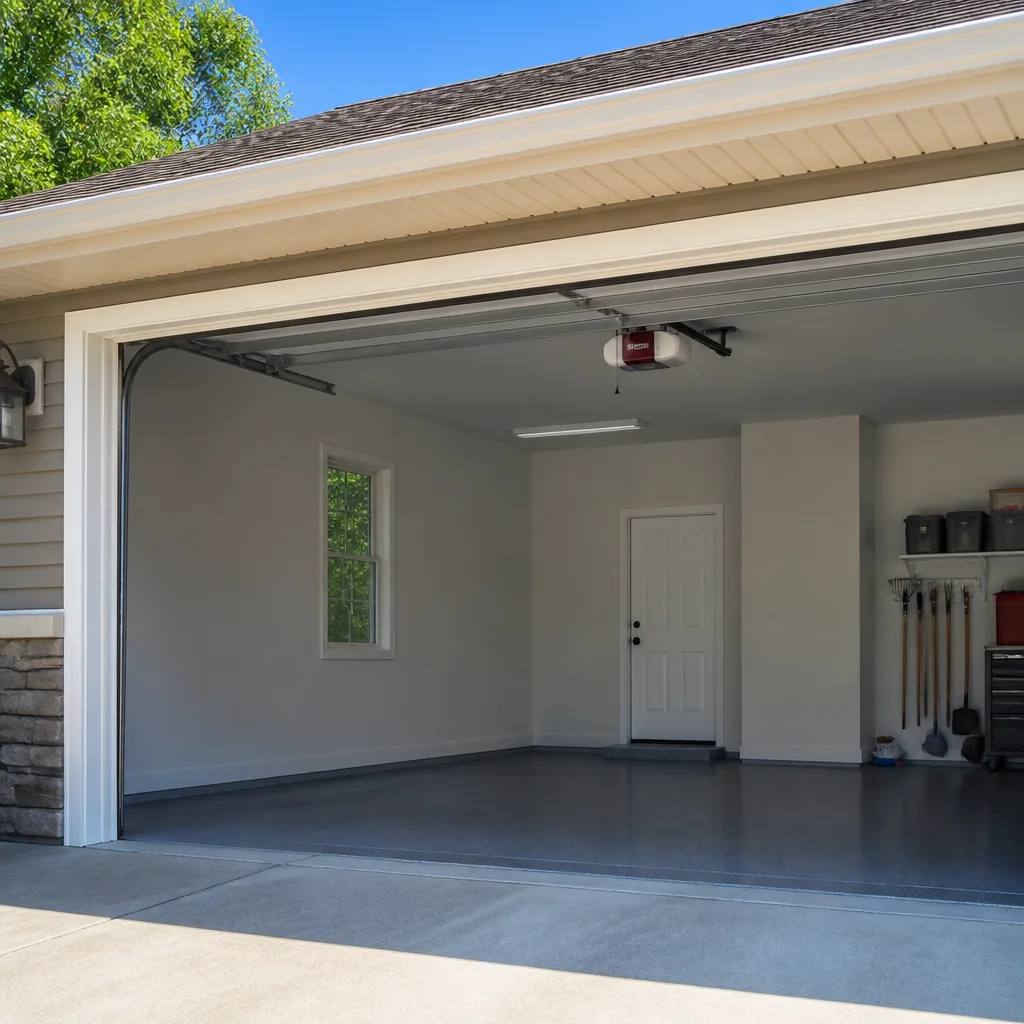
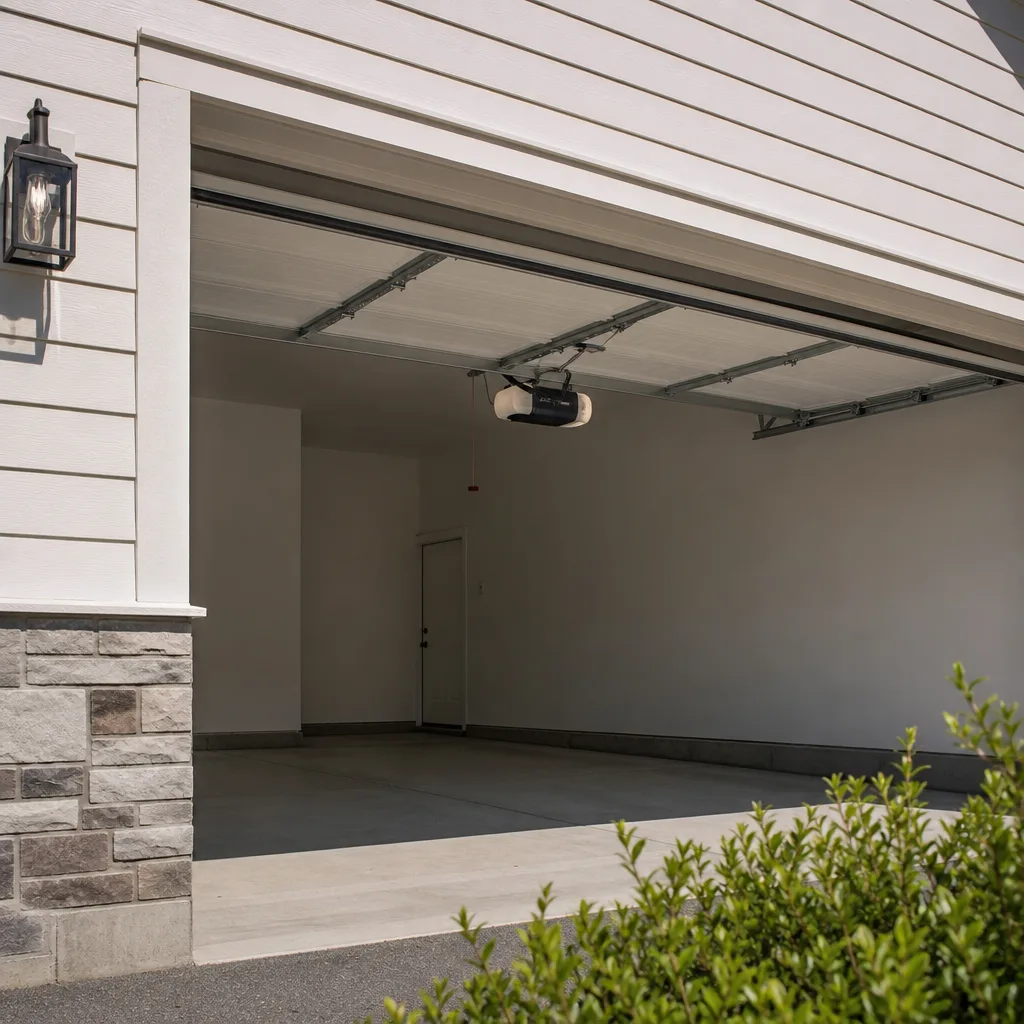
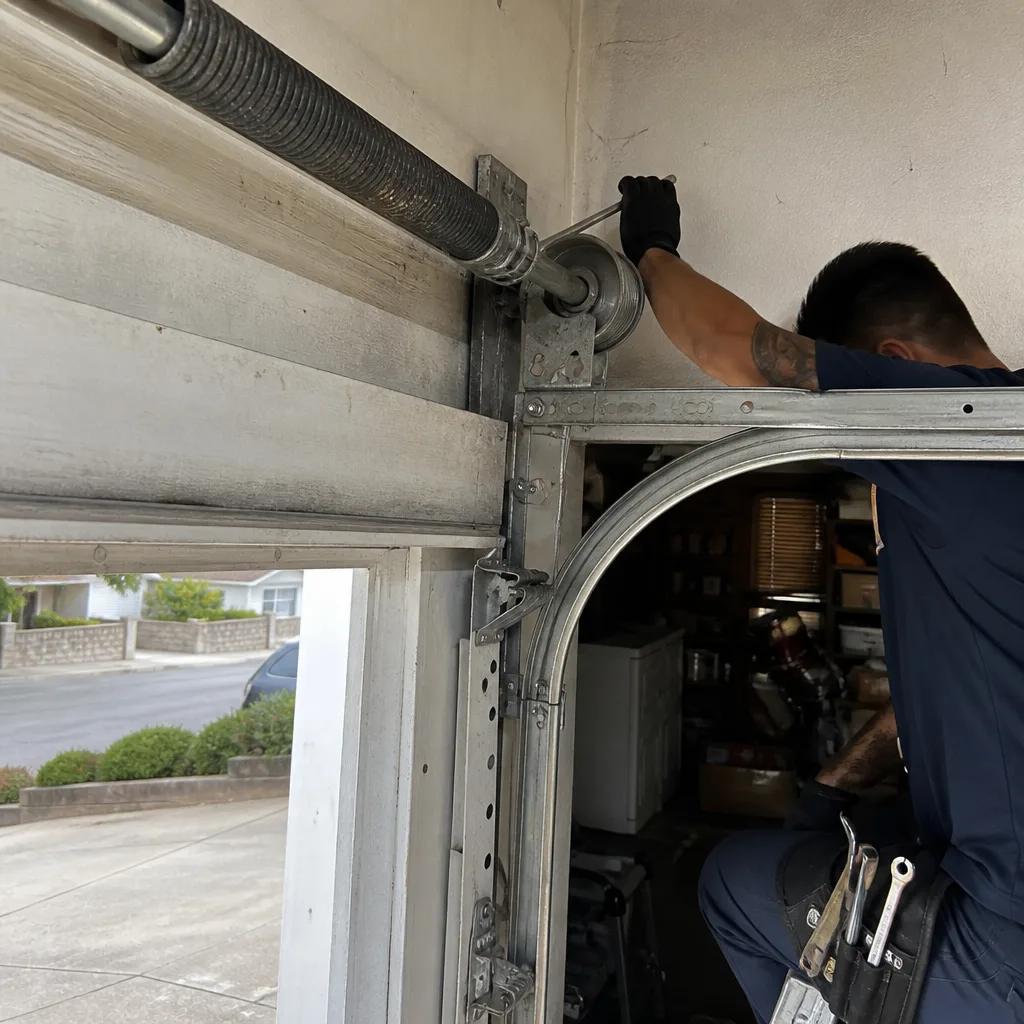 Before
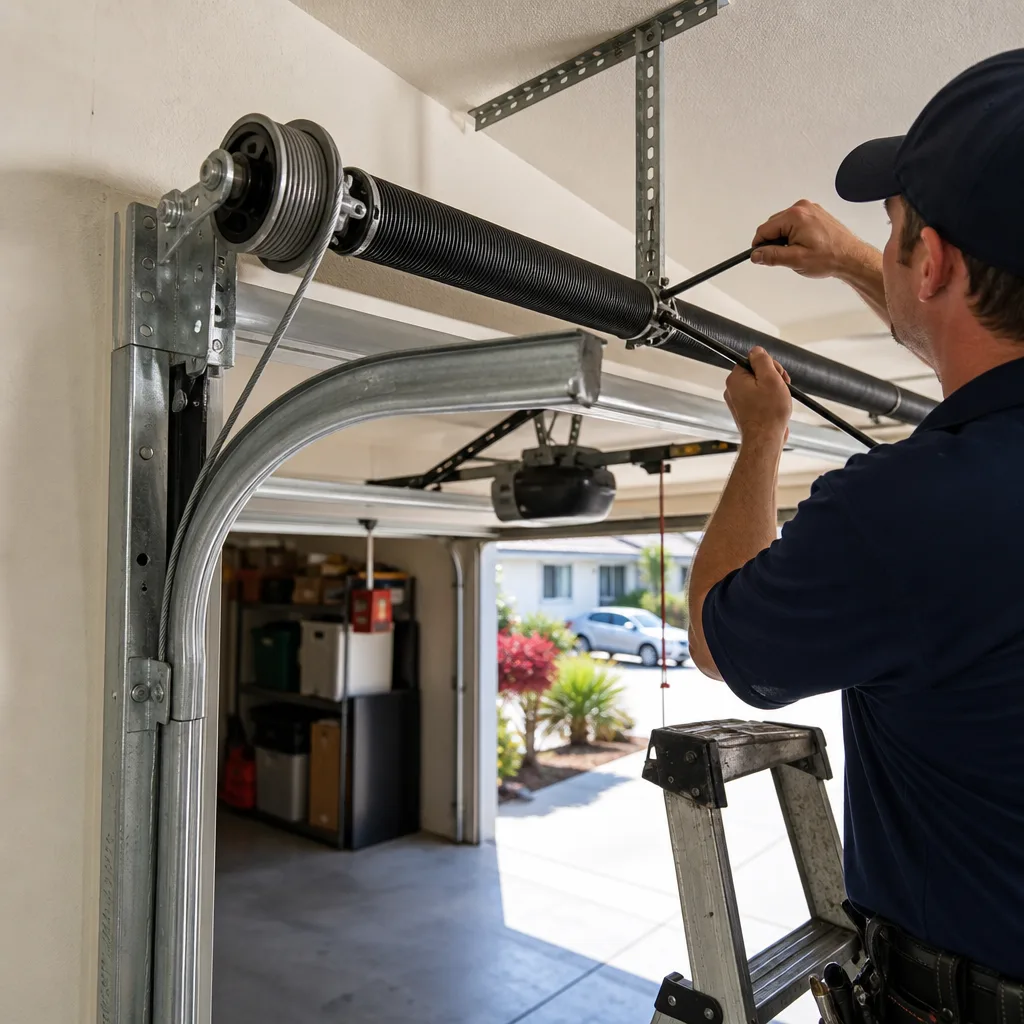 After
After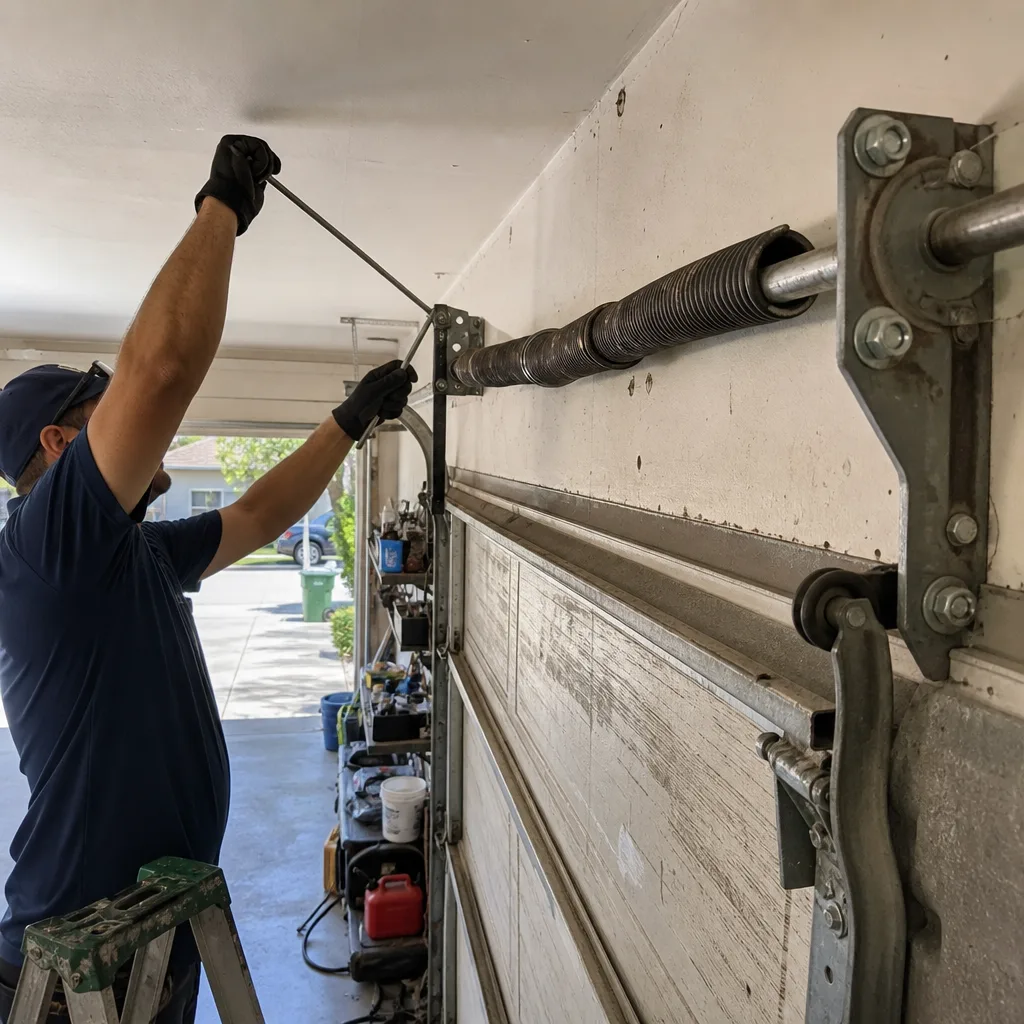 Before
 After
After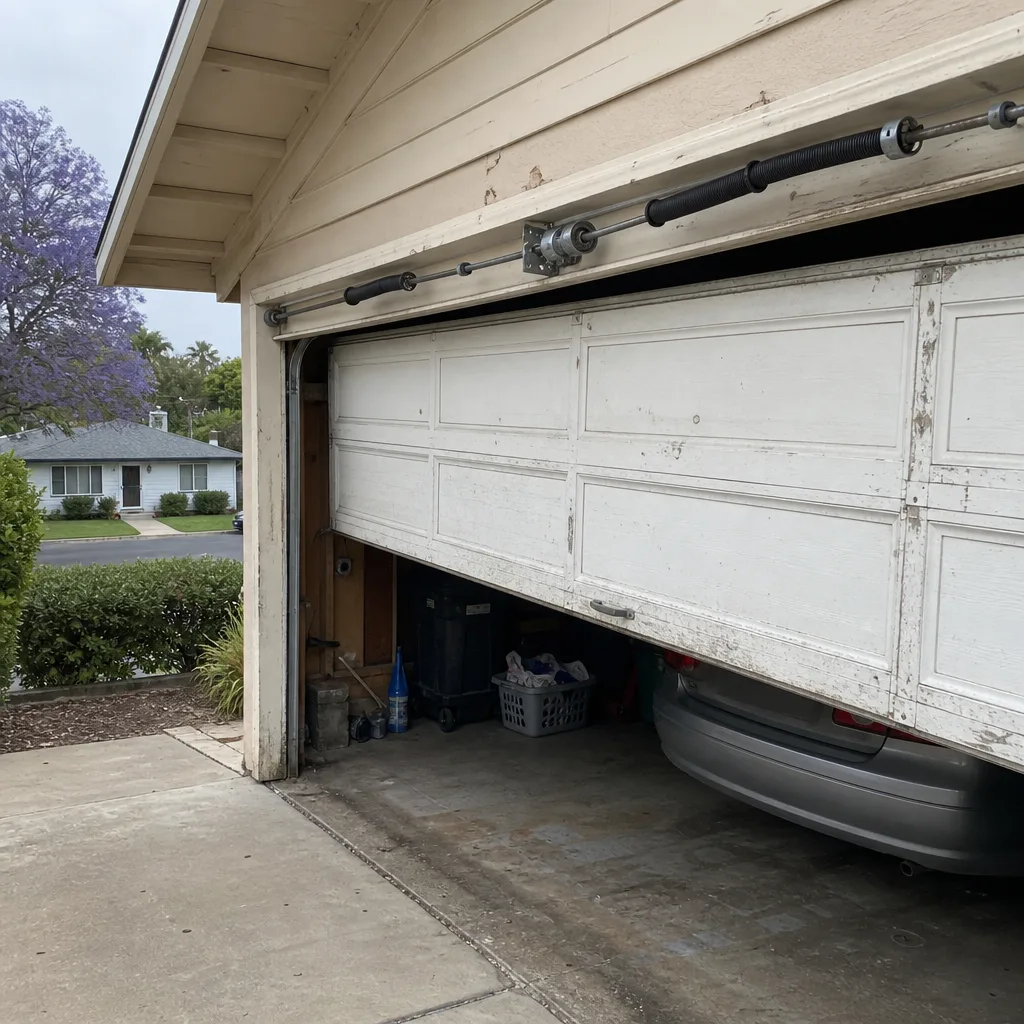 Before
 After
AfterGarage Door Repair Maintenance Checklist for La Mesa Homeowners
A garage door in La Mesa doesn’t fail on the day it breaks. It fails months earlier, quietly, at the bottom bracket or inside the spring coil, while the opener keeps lifting it anyway. Otto has replaced more bottom brackets in La Mesa than anywhere else he works, and it’s almost always the same reason: homeowners lubricated the chain and the rollers but never looked at the bracket, and then one morning the cable jumped the drum at 6 a.m. with a car still inside. This Garage Door Repair checklist is built around what actually fails on La Mesa doors, in the order it fails, based on twenty years of service calls in this zip code. Do these twelve things and you’ll double the life of your springs and cables without touching anything dangerous.
Quick Answer
A garage door maintenance checklist for La Mesa homes comes down to twelve tasks: lubricate six specific parts (never the tracks), test the auto-reverse and force settings on your opener every month, inspect cables and brackets for rust that the marine layer accelerates, tighten hardware twice a year, and call a professional the moment you hear a pop or see a frayed cable. Most doors in La Mesa need this routine every three months, with a deeper annual check that takes about an hour; see our more guides & resources for related maintenance topics. Skip the opener force test and you’re skipping the one task California law says you should be able to do.
Table of Contents
- Why La Mesa’s Marine Layer Changes Your Maintenance Schedule
- Monthly Tasks: The 10-Minute Walkaround
- Quarterly Tasks: Lubrication Done Right
- Annual Tasks: The Full La Mesa Door Inspection
- Opener Tests Most Homeowners Have Never Done
- Cables, Drums, and the Rust Problem Nobody Sees
- Wood Doors: The Lake Murray Swell Factor
Why La Mesa’s Marine Layer Changes Your Maintenance Schedule
La Mesa sits in a strange pocket. It’s not as dry as El Cajon and not as damp as Point Loma, but the marine layer rolls over the hills on summer mornings and settles into the canyon-adjacent neighborhoods around Lake Murray, Helix, and the older sections off the Boulevard. That moisture doesn’t just wet your windshield. It condenses inside the garage, especially if the door faces west and the concrete slab stays cool.
What that means for your door: the torsion springs, cables, and the inside of the cable drums see more condensation than they would ten miles east. We’ve opened drums in La Mesa where the cable had rusted halfway through while the homeowner assumed cable rust only happened in beach towns. It doesn’t help that many La Mesa garages were built into hillsides, which keeps temperatures stable but holds humidity longer.
The practical takeaway is simple. If you live in Fletcher Hills, San Carlos, the Village, or anywhere west of the 125 toward Lake Murray, run this checklist every three months instead of twice a year. The extra inspection takes ten minutes and it’s the difference between catching cable rust early and replacing a snapped cable at 9 p.m. on a Sunday.
If you want a deeper look at how La Mesa’s climate affects doors specifically, read our Garage Door Repair in La Mesa page. We go into the specific failure patterns we see across different neighborhoods.
Monthly Tasks: The 10-Minute Walkaround
This is the part of the checklist that catches the expensive problems before they get expensive. Ten minutes. No tools required except your eyes and ears. Do this on the first Saturday of the month, or tie it to paying your water bill, whatever makes it stick.
- Listen to the door as it opens and closes. Stand inside the garage and run it once. Smooth and quiet is what you want. A grinding sound from the rollers means they’re wearing flat. A squeak from the springs means they’re rubbing against each other and need a light coating. A pop or a sharp snap is a spring breaking, and if you hear that, stop running the door and call us. A door is 200 pounds riding on two springs. Respect it.
- Watch the cables on both sides while the door moves. They should stay tight against the drums, not sag or flutter. A loose cable that’s starting to unwind from the drum is a warning that the spring is losing tension or the drum has slipped. This is the failure Otto sees most often on La Mesa doors that get ignored.
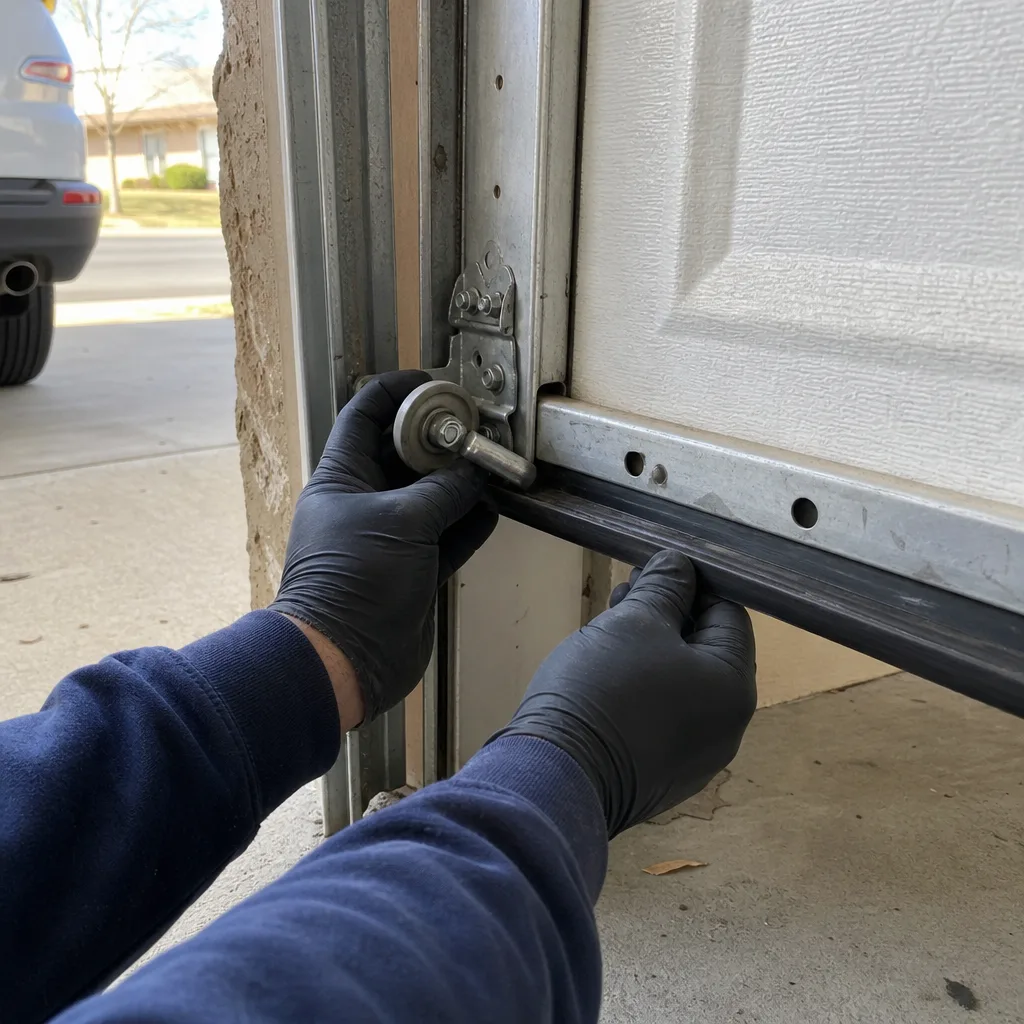
- Look at the bottom bracket. It’s the small L-shaped piece that connects the cable to the bottom corner of the door. In La Mesa, this bracket fails more than any other hardware part, and it’s always the same story: rust built up on the bracket where the cable rides against it, and one morning the cable slips off and the door launches crooked or jams halfway up with the car inside. If the bracket looks crusted or bent, call before the cable jumps.
- Test the auto-reverse. Lay a 2×4 flat on the floor under the door and close it. The door should hit the wood and reverse within two seconds. If it doesn’t, that’s not a maintenance issue, it’s a safety violation. California law requires every garage door opener sold since 1993 to have a working auto-reverse. We’ll cover the full test in the opener section below.
- Check the opener’s chain or belt tension. If it sags more than an inch in the middle when the door is closed, it’s too loose. A loose chain slaps against the rail and wears the sprocket. A loose belt slips and strips teeth. Both are cheap fixes if caught early.
Do these five things every month and you’ll catch most failures before they strand a car in the garage. The rest of the checklist is deeper but less frequent.
Quarterly Tasks: Lubrication Done Right
Here’s the rule most La Mesa homeowners get wrong: you lubricate the moving parts, not the rails. Never put grease on the tracks. The rollers ride on the track, they don’t slide on it. Grease on the track collects dirt and grit and wears the rollers down faster. If a technician or a YouTube video tells you to grease the tracks, stop taking advice from them.
What you actually lubricate, every three months:
- Rollers: Steel rollers get a few drops of light oil on the bearing where the wheel meets the shaft. Nylon rollers get the same on the bearing only, never the wheel itself. In La Mesa’s moisture, steel rollers rust fast if the bearing is dry.
- Hinges: Every hinge along the door panels has a pivot pin. A drop of oil on each pin, top to bottom. You’ll hear the difference immediately.
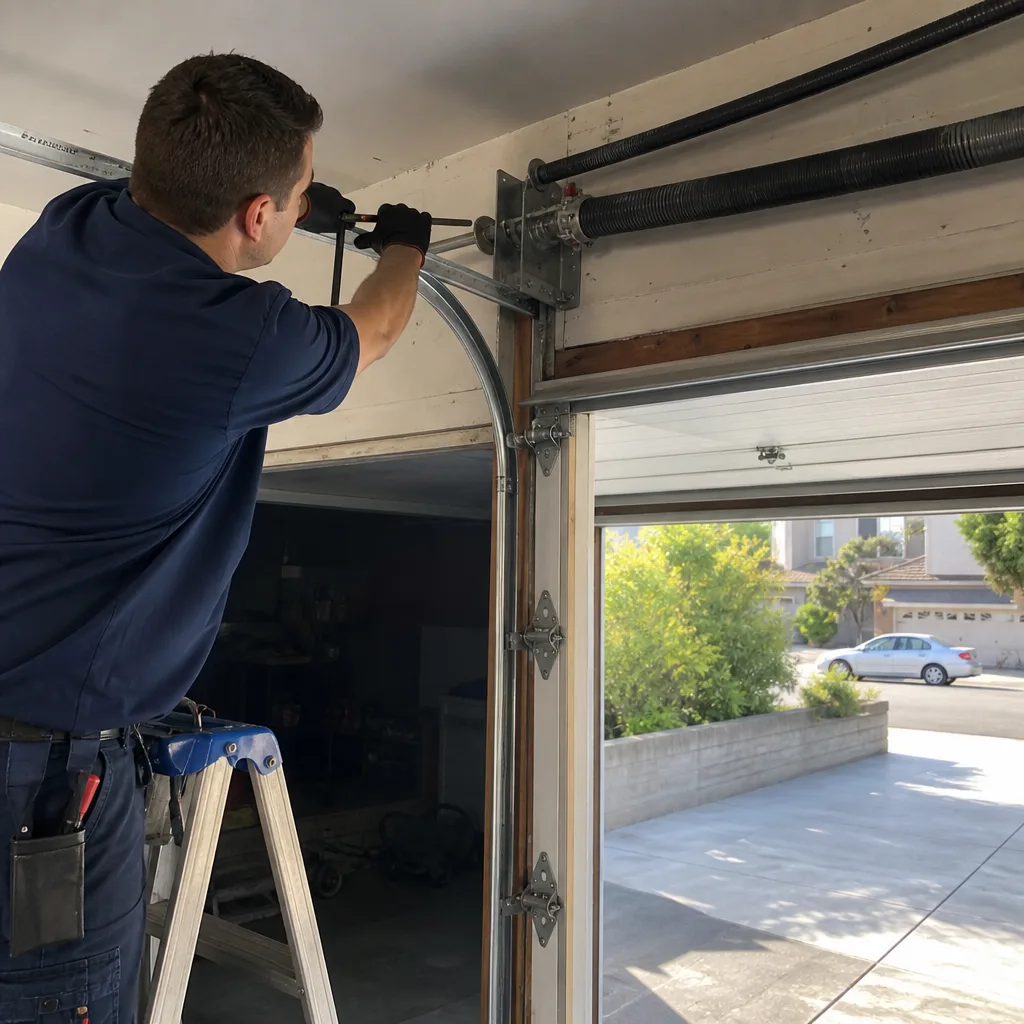
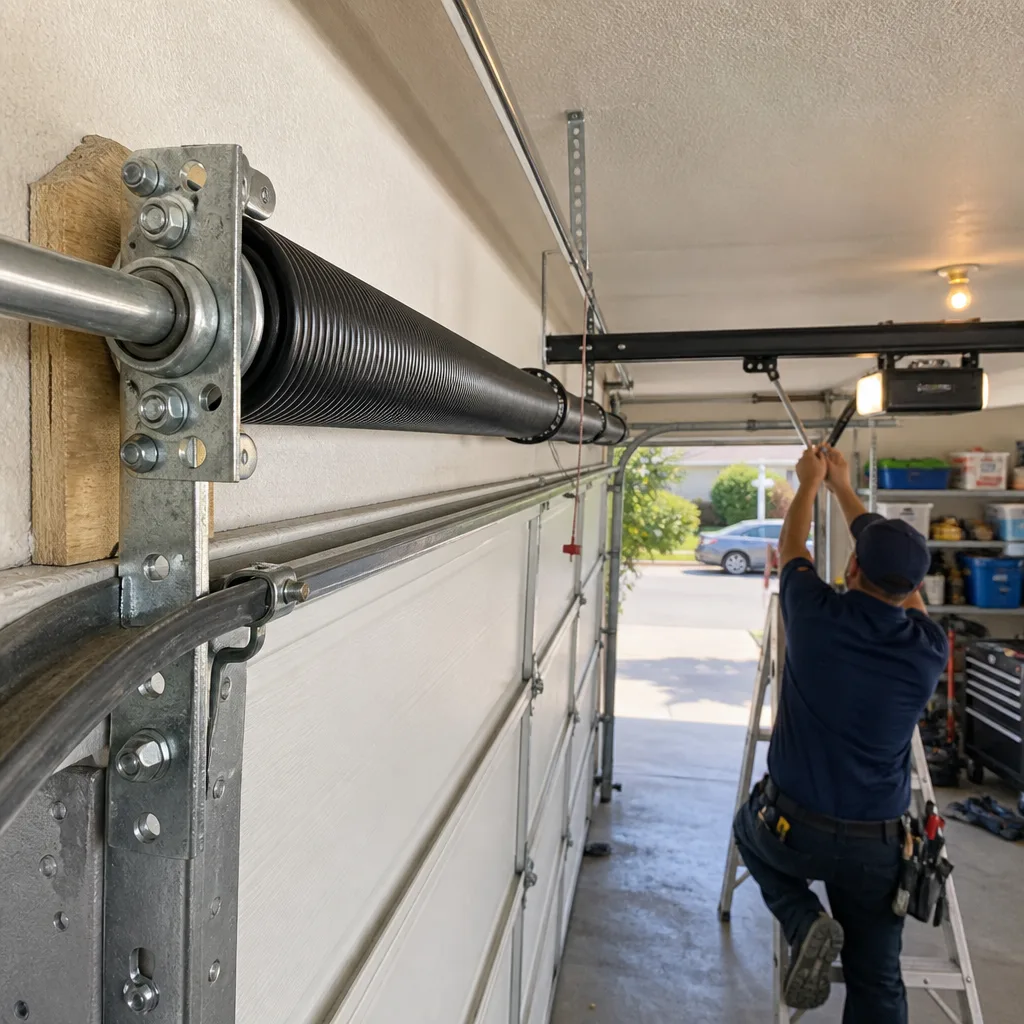
- Springs: Torsion springs rub against themselves with every cycle. A light spray of garage-door spring lubricant on the coils, not a heavy soak. Heavy grease traps rust and does more harm than good.
- Lock and handle: A squirt of graphite in the keyhole and on the lock bar keeps it from seizing in the marine air.
- Opener rail: If you have a chain-drive opener, a thin coat of white lithium on the rail. If it’s belt-drive, leave it alone.
- Bottom seal: Spray it with silicone once to keep it flexible. Not a lubricant in the traditional sense, but it prevents the rubber from hardening and cracking in the La Mesa sun on the west-facing doors.
And what you never lubricate: the tracks, the opener motor, and anything with a circuit board. We get calls every month from homeowners who sprayed WD-40 into the opener motor because it was “squeaking.” By the time it’s squeaking, it’s not asking for oil. It’s asking to be replaced. If the opener is straining, the problem is almost never the opener. It is almost always the door: a broken spring, a frayed cable, or a panel binding in the track. The opener is working harder to compensate, and eventually it burns out.
For more on how the opener and door work together, see our Garage Door Opener in La Mesa page.
Annual Tasks: The Full La Mesa Door Inspection
Once a year, give the door a thorough going-over. This is the one-hour version. Otto does this on his own door every January, and he counts spring cycles the way you count tire miles. Here’s the full list.
- Inspect every roller. Pop them out of the track one at a time, spin them, and look for flat spots or wobble. A flat roller drags, strains the opener, and wears the track. Replace any that don’t roll smoothly. Rollers are cheap and the job takes fifteen minutes if you have the right size.
- Check the tracks for gaps and alignment. The track should sit parallel to the door edge all the way up, with about a quarter inch of clearance. If you see a gap that widens or narrows, the track has shifted or the wall bracket has pulled loose. In La Mesa’s older hillside garages, we see foundation settling that pushes tracks out of alignment over time.
- Tighten every nut and bolt. Going top to bottom, check every hinge bolt, track bracket, and spring mounting bolt. A door cycles multiple times a day, hundreds of times a year, and that vibration loosens hardware. A loose bolt at the hinge is how a panel starts to crack.
- Test the balance. Pull the red release cord and lift the door manually. It should lift smoothly, stay open about three feet off the ground without you holding it, and lower without slamming. If it’s heavy or drops, the spring is worn and the opener has been carrying the extra load. That’s how openers burn out early.
- Check the weather seal. The rubber strip along the bottom of the door and the vinyl strips on the sides should be tight and flexible. In La Mesa, the sun beats on the west-facing bottom seals and the marine air rots the rest. A cracked seal lets in dust, moisture, and critters. More importantly, it lets conditioned air out and heated air in, and your garage stays damp.
- Run the force test. This is the one California says you should be able to do. Details below.
Opener Tests Most Homeowners Have Never Done
Every garage door opener has two safety systems, and most homeowners have only ever tested one. The first is the auto-reverse, the one everyone has heard about. The second is the force-sensitivity setting, and if you’ve never adjusted it, your opener may be able to push through an obstruction rather than reverse from it. California law, specifically the UL 325 standard that the state adopted, requires both systems to function. When we install an new door in La Mesa, Otto tests both before he leaves, and he shows the homeowner how to do it.
The reversal test: Close the door on a 2×4 laid flat. It should hit the wood and reverse within two seconds. Do this monthly.
The force test: Close the door and place one hand under it as it approaches the floor. The door should reverse before you have to push hard. If you have to strain to stop it, the force setting is too high. You adjust it with the small dials or buttons on the opener motor. On LiftMaster and Chamberlain openers, they’re marked with arrows on the back of the unit. On Genie, they’re under the light cover. The manual shows the exact location, but the principle is the same on every brand: you want the minimum force that still closes the door reliably.
Why this matters in La Mesa specifically: older doors with heavier wood panels, common in the original 1950s and 60s neighborhoods like the Village and Del Cerro, need more force to close. Homeowners crank the dial up to keep the door sealing, and then the safety reversal is too weak to trigger. A child or pet in the doorway becomes the 2×4. That’s the exact scenario the law was written for. Test it once a month, adjust it once a year.
One more thing about the opener: if it has a backup battery, test it. Pull the release cord and run the opener on battery alone. In La Mesa, power outages from heat waves and Santa Anas are a real thing, and the battery is what lets you get the car out when the grid is down. If the battery is more than three years old, replace it.
Cables, Drums, and the Rust Problem Nobody Sees
The lifting cables are the most dangerous and least understood part of a garage door system. They’re under tension at all times, even when the door is closed, and they don’t fail gradually in a way you can see from the outside. The failure happens inside the drum, where the cable wraps around a grooved wheel at the top of the door.
Down here, the marine layer is the culprit. Moist air from the coast comes over the hills at night, settles in the garage, and condenses on the coldest metal surfaces. The cable drum is one of the coldest metal surfaces in the room. That condensation sits in the grooves of the drum and against the cable, and over months, it rusts the individual strands. We’ve pulled cables out of La Mesa garages where the outer strands were fine and the inner core was powder. The cable looked fine until it wasn’t.
What to look for:
- Rust coloring on the cable anywhere, especially near the drum.
- Frayed strands poking out from the cable sheath.
- A flat area or kink in the cable when the door is halfway up.
- The cable sitting loosely against the drum instead of tight in the groove.
If you see any of these, do not try to remove the cable yourself. The spring is holding enough tension to remove a finger. Call a professional. Genuine warning from someone who has seen it: a frayed cable under tension is a loaded weapon. We replace cables the same day in La Mesa, and the price is quoted before we start, so you’ll know the number before the truck moves.
Prevention is straightforward. Once a quarter, wipe down the cables with a clean rag and inspect them. If they’re dry and clean, leave them alone. If you see surface rust starting, wipe them with a rag lightly coated in a rust-inhibiting oil like WD-40 Specialist, then wipe them dry. You’re not lubricating the cable. You’re putting a thin protective film on it. Heavy rust means replacement, not oil.
Wood Doors: The Lake Murray Swell Factor
Wood garage doors are beautiful, and in the canyon-adjacent neighborhoods around Lake Murray and Del Cerro, they’re common on the older custom homes. They also move with the seasons in a way steel and fiberglass doors don’t. Wood absorbs moisture from the marine air in spring and early summer, swells, and then dries and shrinks in the fall and winter Santa Anas. Over years, that cycle warps panels and loosens joints.
The inspection points for a wood door:
- Panel edges: Look for paint cracks along the bottom edge of each panel. Moisture gets in through those cracks and rots the wood from inside. In La Mesa, the bottom panel goes first because it’s closest to the concrete slab, which wicks moisture whenever it rains or when the marine layer keeps the slab damp.
- Joint separation: Run your hand over the seams between panels. If you can feel a gap or a ridge, the wood is moving. Small gaps you can fill with wood filler and repaint. Large gaps mean the panel is warping and should be watched.
- Stain and seal: A wood door needs to be sealed every two to three years in La Mesa’s climate. Not painted, sealed. Paint forms a film that cracks. A penetrating seal soaks in and moves with the wood. If you can pour water on the door and it doesn’t bead up, the seal is gone.
- Bottom rail: The lowest horizontal piece is the most rot-prone part of the door. Tap it with a knuckle. If it sounds hollow or soft, the wood is compromised. A soft bottom rail means the hinges and brackets that attach to it are about to pull loose, and a door hanging from one bracket is a door on the floor.
If the door is too far gone, replacement is straightforward. We carry Clopay, Amarr, and Wayne Dalton doors, and Otto will tell you honestly whether your existing wood door is worth refinishing or whether you’re spending good money on a door that’s already structurally done. Call and ask. He’ll tell you over the phone.
Common Mistakes to Avoid
- Greasing the tracks. The tires on a car don’t need grease on the road. The rollers don’t need grease on the track. You’re just making a dirt magnet that wears everything out faster.
- Ignoring a squeaky spring. A light squeak is normal. A loud, persistent squeal means the spring coils are dry and rubbing. In La Mesa’s damp air, a dry spring rusts faster than a lubricated one. A light coat of spring lubricant every quarter fixes it.
- Cranking up the opener force. When the door starts binding, the temptation is to turn the force dial up so the opener pushes through it. That’s the exact opposite of what to do. You’re masking the real problem while disabling your safety systems. Find the bind and fix it.
- Skipping the bracket inspection. The bottom bracket is the single most common failure point on La Mesa doors. It gets wet, it rusts, and then the cable jumps. One minute of inspection every month prevents a morning with the car trapped in the garage.
- Replacing the opener before checking the door. If the opener motor is running but the door won’t move, the problem is almost always the door’s springs. A broken spring means the opener is trying to lift 200 pounds without mechanical help, and it can’t. Replacing the opener won’t fix a broken spring.
- DIY spring replacement. We know the YouTube videos make it look easy. They don’t show the part where the winding bar slips and takes your hand with it. Torsion springs are under enough tension to kill. This is the one repair where even experienced homeowners should step back. Otto has replaced thousands of springs and he still respects the tension.
- Lubricating the opener motor. WD-40 in the motor housing is a fast way to a dead motor. The motor is sealed for a reason. By the time it’s making noise, lubrication isn’t the solution.
When to Call a Professional
Some maintenance is straightforward and safe. Some is not. Call a professional if you see a frayed cable, a broken spring, a door hanging crooked in the tracks, or a panel that’s split or soft at the bottom. These are not DIY repairs in any zip code. You also want a pro if the door is more than fifteen years old and hasn’t had a professional inspection in years, or if you’ve done everything on this list and the opener still strains. Strain means spring, and springs are not a homeowner repair.
Otto’s Garage Door offers free estimates in La Mesa. Call (619) 903-6668 and Otto will quote the job on the phone and hold that number when he gets there. If you’ve got a written estimate from another company, bring it; he’ll give you a free second opinion, no trip charge inside the county. For tips on vetting contractors, read How to Hire a Garage Door Contractor in La Mesa: A Step-by-Step Guide.
Frequently Asked Questions
Every three months for the lubrication and visual inspection, and once a year for the full top-to-bottom check. La Mesa’s marine layer pushes moisture into garages on a regular cycle, so doors here need attention more often than they would in East County. The monthly walkaround catches bracket rust and cable wear before they become failures.
Lubricate the rollers, hinges, springs, lock, and the opener rail if it’s chain-drive. Use light oil on rollers and hinges, a spray spring lubricant on the torsion springs, and graphite in the lock. Never grease the tracks and never spray anything into the opener motor.
Close the door on a 2×4 laid flat on the floor. The door should hit the wood and reverse within two seconds. Then close the door and put your hand underneath it as it approaches the floor; it should reverse before you have to push hard. If either test fails, adjust the force setting down or call us at (619) 903-6668 and Otto will walk you through it.
No. Torsion springs are under enough tension to cause serious injury or death, and the tools involved are called winding bars for a reason. Leave spring replacement to a professional who does it every day. It’s a quick job for Otto’s crew and the price is always quoted before the work starts.
The marine layer is the difference. La Mesa sits close enough to the coast that moisture rolls over the hills at night and condenses inside garages, especially in homes west of the 125. El Cajon is far enough inland that the air is drier all year. That’s why quarterly cable and bracket inspections matter more here.
Most of the maintenance on this list costs nothing but your time and a can of lubricant. If something needs repair, the cost depends on the part: rollers are inexpensive, cables are moderate, and springs are the higher-ticket item. Call (619) 903-6668 for an exact quote, estimates are free and the number Otto quotes on the phone is the number on the invoice.
The Bottom Line
A garage door in La Mesa lasts longer when the homeowner treats it like a 200-pound mechanical system instead of a wall that moves. The twelve tasks on this checklist, done monthly, quarterly, and annually, will double the life of your springs and cables and catch most failures before they strand a car in the garage. Lubricate the right parts, test the opener’s safety systems, inspect the brackets and cables for rust, and respect the fact that springs and cables can kill. Do those things and the door will outlast the opener. If you find something that doesn’t look right, call (619) 903-6668 and Otto will tell you straight whether it needs fixing. If you’re reading this from anywhere in La Mesa, there’s a good chance he’s already on your street from a call last week.
Written by Otto Reinhardt, Owner at Otto’s Garage Door home, serving La Mesa since 2004.