

Last updated September 10, 2026
Full 25-point door and opener safety check with every visit - springs, cables, rollers, tracks, and your LiftMaster or Chamberlain opener included
You get a price before we start. It does not change when the truck arrives.
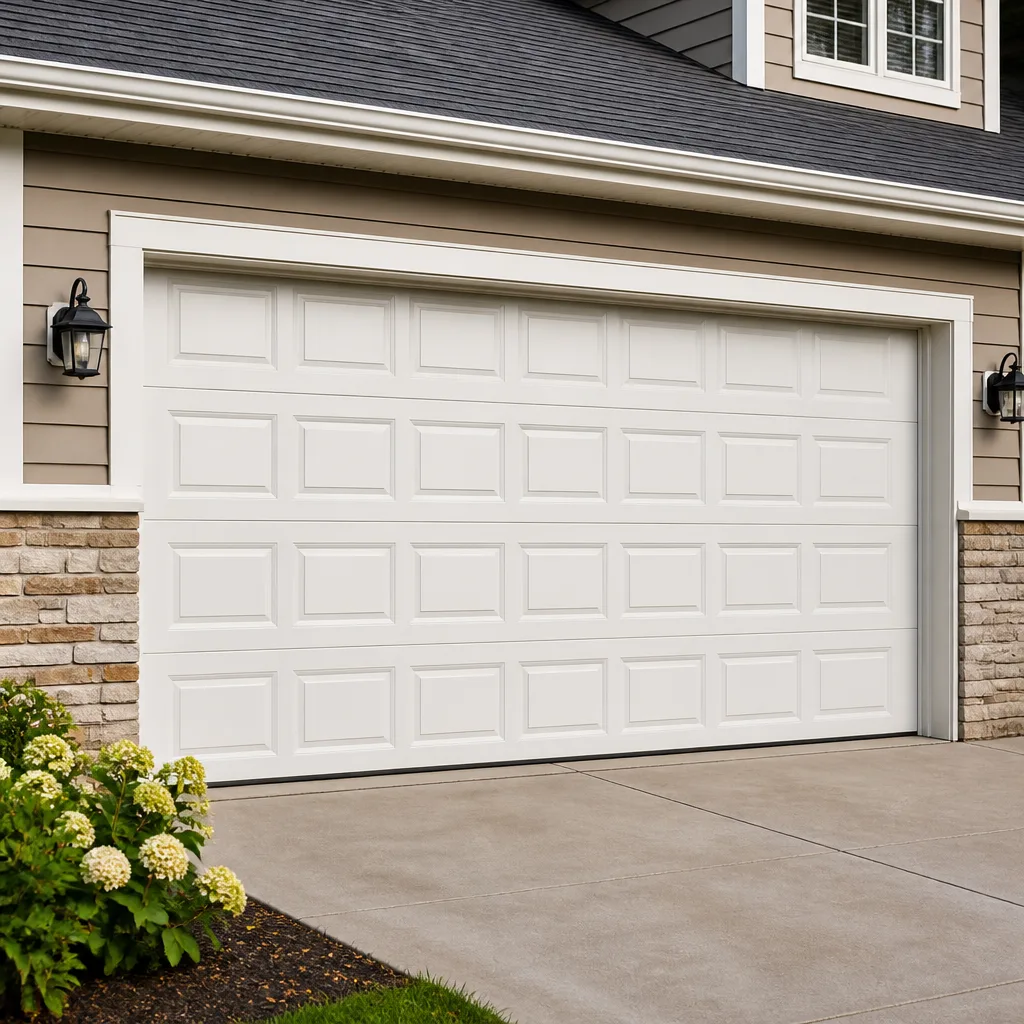

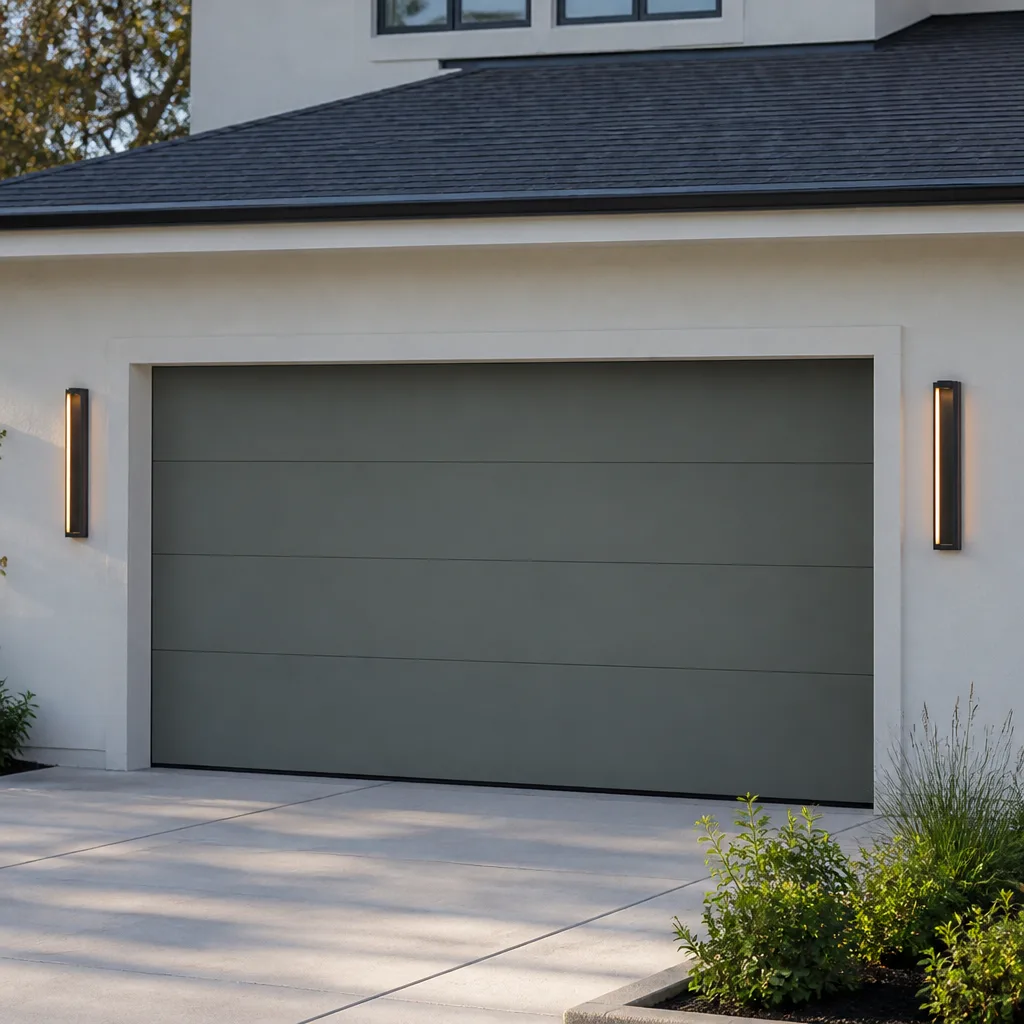
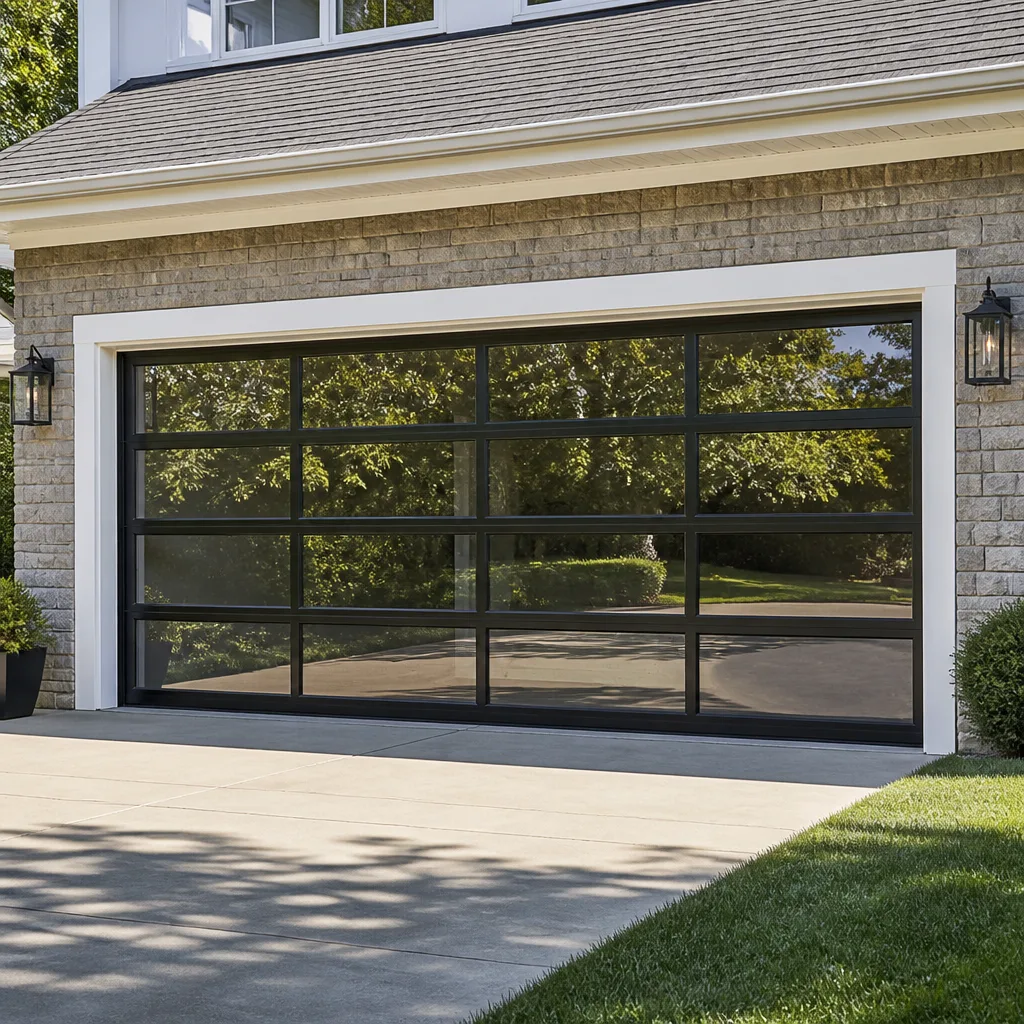
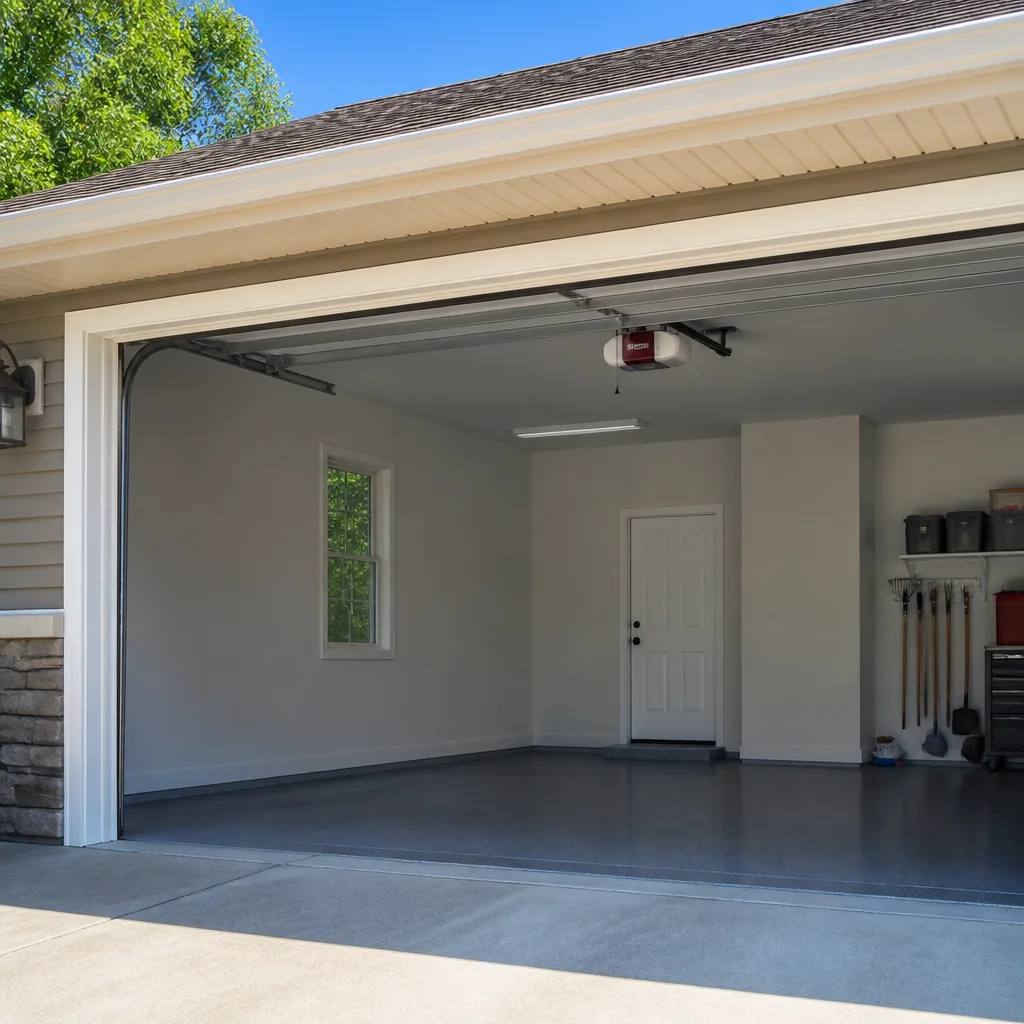
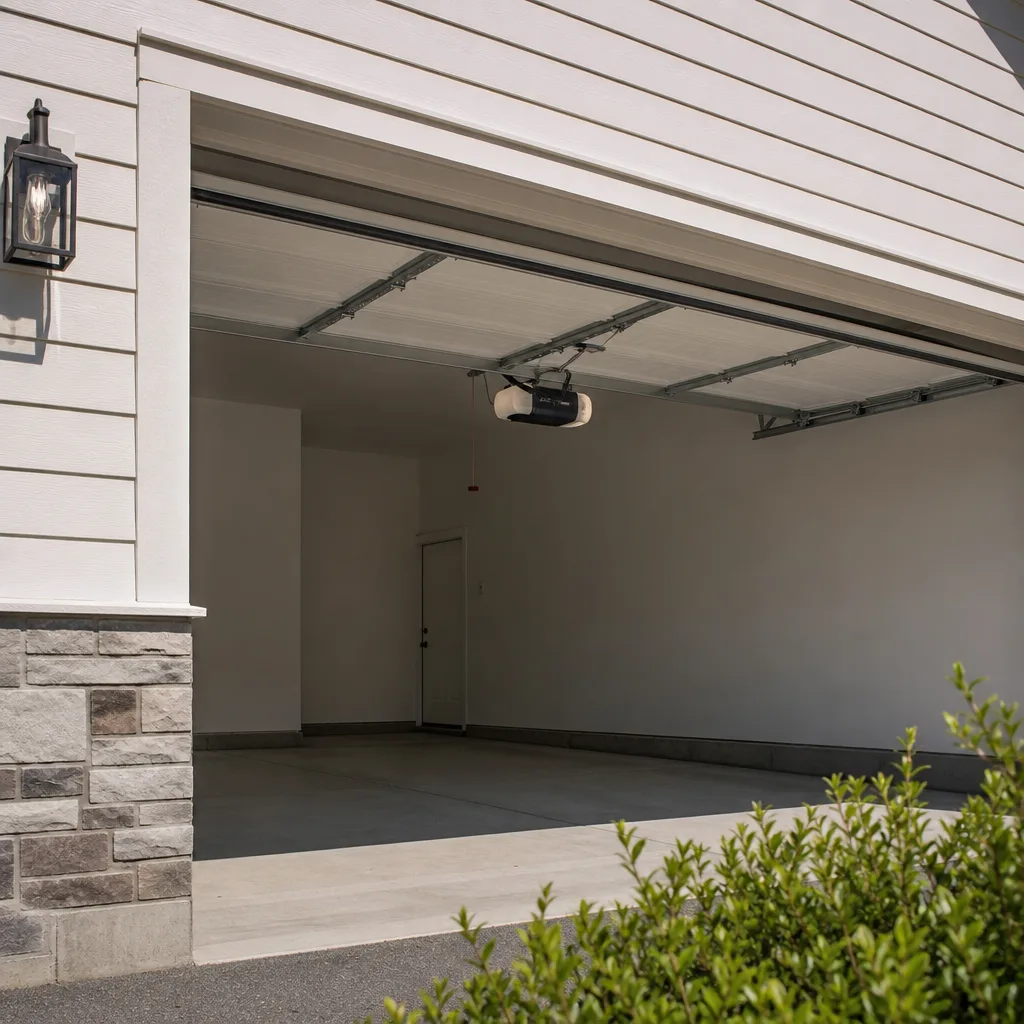
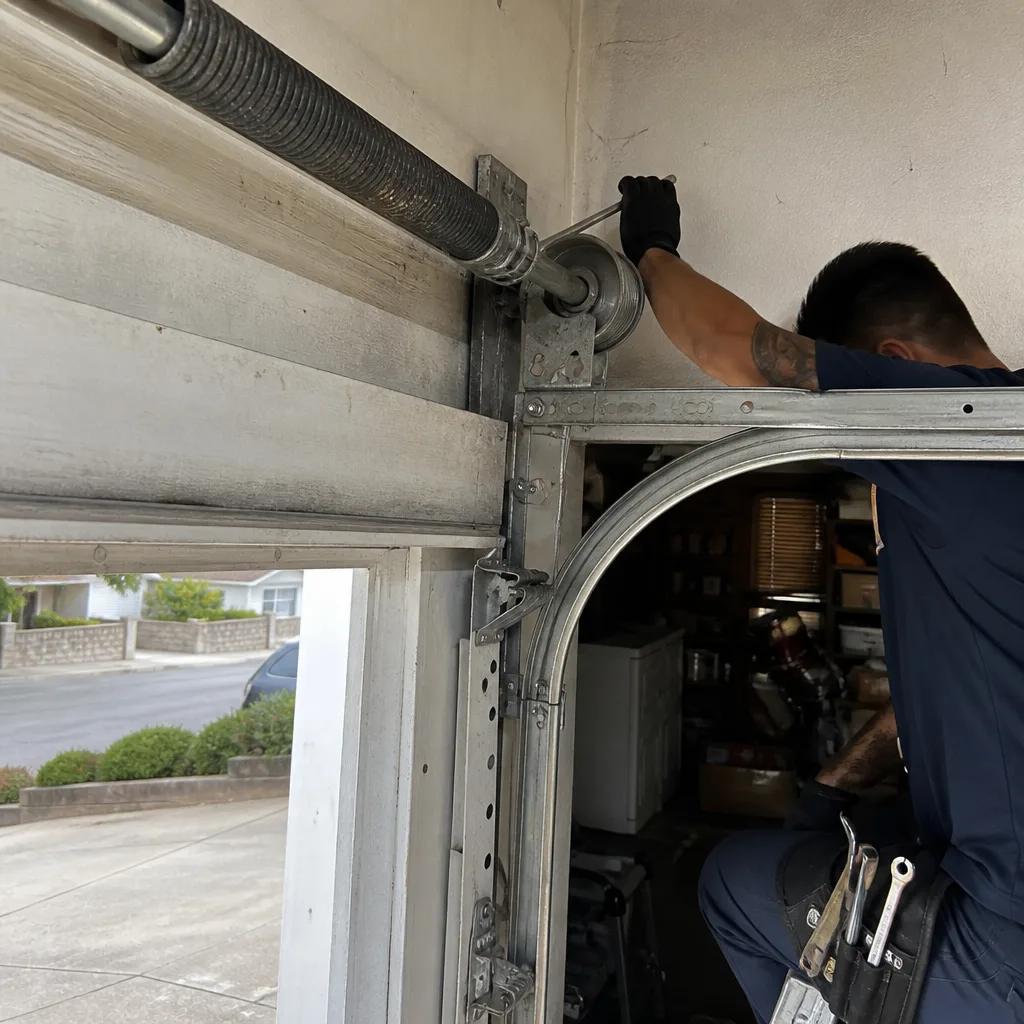 Before
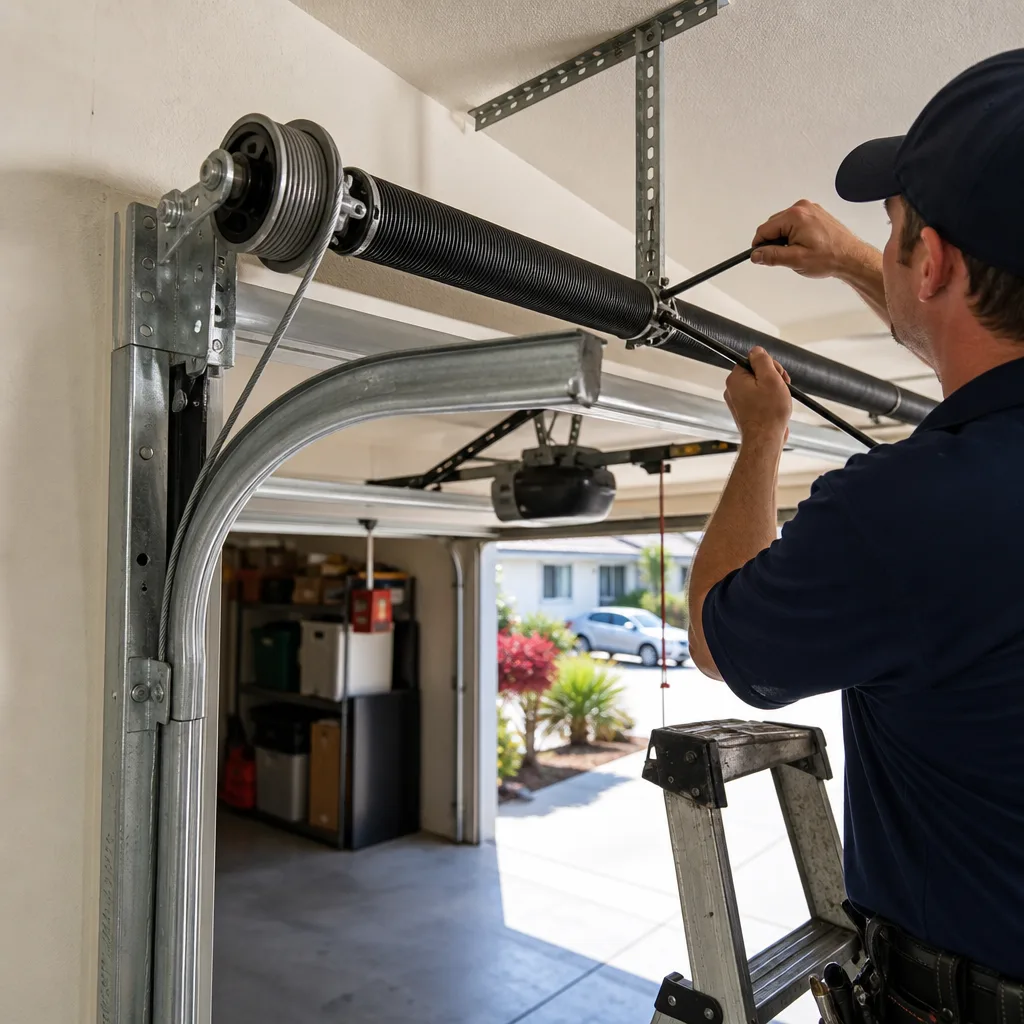 After
After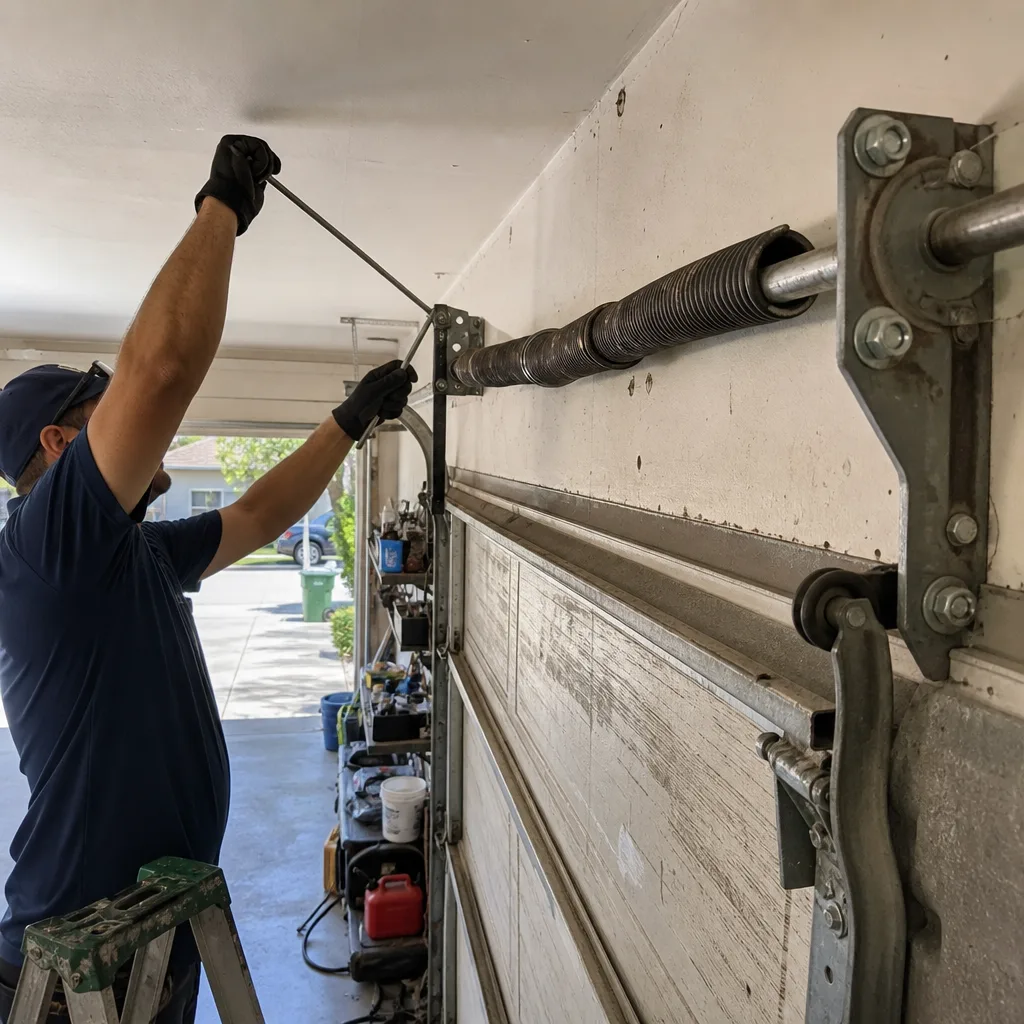 Before
 After
After Before
 After
AfterHow to Hire a Garage Door Contractor in La Mesa: A Step-by-Step Guide
If you search “garage door repair La Mesa” right now, at least three of the top results will show a La Mesa address that traces back to a national franchise with no physical shop in the city. One of them uses a mail-forwarding service on a street that’s a strip mall with no garage door business in it. That’s the reality of this trade in San Diego County. This guide gives you the five questions that separate a real local operator from a rebranded call center, the license check that takes under two minutes, and the red flags that cost La Mesa homeowners hundreds every week. For more guides & resources, see our blog.
Quick Answer
To hire a garage door contractor in La Mesa, verify their CSLB license classification C-61/D-28, confirm a physical address inside San Diego County, ask who physically shows up and whether that person is covered by workers’ comp, get a written quote for the exact spring and hardware grade before work starts, and walk away from any bid that pressures you to decide on the spot. That’s the whole game. Everything else in this guide is the why and the how.
Table of Contents
- How to Verify a License in Under Two Minutes
- The Five Questions to Ask Before Booking
- Red Flags Specific to the Garage Door Trade
- Why the Lowest Bid Is Often a Bait-and-Switch on Spring Grade
- What “Owner-Operated” Actually Means for Accountability
- How to Read a Written Estimate Like a Mechanic Reads a Parts List
- What La Mesa Homeowners Should Know That Other Markets Don’t Deal With
- What to Do After You Hire: Documentation and the First 30 Days
How to Verify a License in Under Two Minutes
Go to the California Contractors State License Board website, type in the company name or license number, and look at two things: the classification and the business address. The classification for garage door work is C-61/D-28, which covers “Door and Gate.” That’s a limited specialty classification, and it matters. A general contractor with a B license can legally do some door work, but a D-28 holder works garage doors every day. When Otto Reinhardt founded Otto’s Garage Door in 2004, he hung his D-28 upon the wall where every customer who walks in can see it.
The second thing to check is the physical address. The CSLB lists a business address, not a PO box or a mail forwarder. If the address pulls up a strip mall and you’ve never seen a garage door company there, that’s your answer. In San Diego County, we regularly field calls from homeowners who hired someone with a “La Mesa office” that turned out to be a UPS Store. Before the truck ever leaves, we invite every customer to check our license number and our published address. If a company won’t let you do that, the search is over.
Here’s the two-minute checklist:
- Visit the CSLB license lookup page.
- Enter the business name or license number.
- Confirm the classification is C-61/D-28 or a valid B with door work history.
- Check the business address is a real location in San Diego County, not a mail service.
- Confirm there are no active judgments, liens, or license suspensions.
- Ask the person on the phone if the address on the license matches where they actually work.
This is not paranoia. A door is 200 pounds riding on two springs. Respect it. The person who works on it should have a verifiable name, a verifiable license, and a verifiable place of business.
The Five Questions to Ask Before Booking
Every La Mesa homeowner should ask these before anyone touches the door. We’ve written them in the order that roots out the call-center model fastest.
Question 1: Who physically shows up at my door?
If they can’t tell you the person’s name before the visit, or if they say “a technician will be assigned,” that’s a national operation routing through a dispatch system. Otto Reinhardt answers the phone himself most days. If it’s not him, it’s a crew member whose name he’ll tell you on the call, who wears a uniform with Otto’s name on the back. You should know who’s coming before you unlock the door.
Question 2: Is that person covered by your workers’ comp policy?
This is the question nobody asks and everyone should. If a worker is injured on your property and the contractor doesn’t carry workers’ compensation, the homeowner’s insurance gets the claim. In California, workers’ comp is required for any company with employees. Ask for the policy carrier and the policy number, then call to verify. A legitimate local shop will give it to you. A fly-by-night will mumble about “independent contractors.” The person on the line should be able to say “yes” without a pause. If they can’t, hang up.
Question 3: Who holds the license, and can I see it?
The license should be in the name of the company, not a third party. Ask for the license number over the phone, then run the two-minute check from the section above. If the phone rep gets defensive, that’s the end of the conversation. Otto’s Garage Door has a published address and license number any homeowner can verify before the truck arrives in La Mesa. We put it in writing. That’s how it should be.
Question 4: What’s the exact spring grade and brand on my quote?
This is the bait-and-switch detector. Garage door springs come in different cycle grades. A 10,000-cycle spring costs more than a 5,000-cycle spring and lasts years longer. A vague quote that just says “spring replacement” means you’ll get the cheap spring at the expensive price. We’ll get into this in detail below.
Question 5: Can I get the price in writing before you arrive, and will it change at the door?
At Otto’s Garage Door, the price quoted on the phone is the price written on the invoice. No additions, no “we found something else” upcharge. The no-hassle upfront pricing does not change between the phone and the driveway. If a company won’t commit a number before arriving, they’re planning to read your driveway and your reaction to set the price. That’s how the franchise model works. That’s not how a local shop treats its neighbors.
Ask all five. A real contractor will thank you for it. A rebranded call center will start dodging by question two.
Red Flags Specific to the Garage Door Trade
Every trade has its warning signs, but garage door work in particular has a few that repeat so often in La Mesa and the surrounding East County that we can list them from memory. Here’s what to watch for.
- Vague quotes over the phone. If they won’t commit to a written number before coming out, they’re planning to price the job on your face, not the door. A straight answer on the phone is the cheapest insurance you’ll ever buy.
- Pressure to decide before the tech leaves. “This price is only good while I’m here” is a closing tactic, not a real constraint. Any legitimate contractor will hold a written quote for at least a week. A door company that pushes you to sign by sundown doesn’t want you to compare their number.
- “Lifetime warranty” with no written document. Lifetime of what? The spring? The door? The company? When a contractor offers a lifetime warranty without handing you a piece of paper that says what it covers, what wears out, and who comes back, there is no warranty. Otto’s Garage Door puts the 90-Day Done Right Promise on every invoice in writing. It says what it covers and it says one call brings Otto back. No fine print, no queue.
- Calls answered by an automated system that routes you to “a representative.” The garage door trade is local. If you can’t reach a human when you call, imagine trying to reach one when the door won’t close at nine at night. A live person answers the phone at Otto’s Garage Door 24/7, including the nights when a spring lets go and your car is sealed inside.
- Unmarked trucks or personal vehicles. A legitimate local company sends a marked van with the company name and license number on the side. An unmarked pickup with a ladder rack is a subcontractor, and the person who sold you the job has no idea who’s in your driveway.
- No physical address on the website or invoice. If the only contact information is a phone number and a web form, you’re dealing with a call center that routes work to whoever will take it. In La Mesa, a real shop has a real address, and Otto has been at his since 2004.
Each of these on its own is a warning. Two or three together is a pattern. Walk away and keep the number for someone who operates like a neighbor, not like a lead aggregator.
Why the Lowest Bid Is Often a Bait-and-Switch on Spring Grade
Here’s the mechanic’s version of what’s really happening with garage door spring pricing in San Diego County. A torsion spring is rated by cycle life: how many open-close cycles it’s built to handle before metal fatigue snaps it. Economy springs are typically rated for 10,000 cycles, which sounds like a lot until you do the math. Four cycles a day, which is common for a two-car household, is 1,460 cycles a year. A 10,000-cycle spring lasts about seven years. A 20,000-cycle spring lasts double that and costs maybe 25% more in parts.
The bait-and-switch works like this: a company quotes a very low price for “spring replacement,” does the work in twenty minutes, you pay, and you never know what spring was installed. Then the spring breaks again in four years, you call a different number because you can’t find the old one, and you pay again. The low bid wasn’t a deal. It was a lease.
When you ask for a quote, ask for the spring cycle rating and the brand name in writing. Chamberlain and Genie both manufacture springs, and a reputable contractor will name the part. At Otto’s Garage Door, the written estimate lists the spring grade and the brand before the work is scheduled. You’re not buying the cheapest spring on the market; you’re buying the spring that matches how you use the door. Otto counts spring cycles the way you count tire miles. He’ll tell you what’s left on yours and put the number on the page.
One more thing about the lowest bid: it’s often priced without the hardware. Springs wear as a set. You replace both at once, not just the broken one, because the other one is at the end of its life too. A quote that covers only one spring is not a discount. It’s a future breakdown waiting for a bad Tuesday. When you compare bids, compare the full job: both springs, the correct cycle grade, the bearings, the cable check, and the balance test. That’s the only way to compare apples to apples in this trade. Not sure whether to DIY? Read our DIY vs Professional Garage Door: The La Mesa Homeowner’s Decision Guide.
What “Owner-Operated” Actually Means for Accountability
The phrase “locally owned and owner-operated” gets thrown around in this industry the way “farm fresh” gets stamped on grocery store eggs. Here’s what it means when it’s real.
An owner-operated shop means the person whose name is on the license is the person who answers the phone, quotes the job, and shows up at your door. The accountability is person-to-person. If something goes wrong, you’re not calling a customer service department in another state. You’re calling the person who stood in your garage and handed you a written price. That changes how the work gets done, because the person doing the work has to see you at the hardware store tomorrow.
When Otto Reinhardt founded Otto’s Garage Door in 2004, the model was simple: the name on the van is the name on the invoice and the name on the license. That’s not a slogan. That’s the minimum standard for doing business in a place like La Mesa, where word travels faster than the gridlock on the 125.
A franchise is the opposite. The “local owner” is often an investor who bought a territory and lives somewhere else. The people answering the phone are in a contact center. The person who shows up is a subcontractor who got the job through an app. The accountability is structural: the owner doesn’t know you, the dispatcher doesn’t know the contractor, and the contractor doesn’t care if you ever call again because the next job is already on his phone. None of these people have any reason to do the job right beyond the minimum the ticket requires.
Ask anyone on your street. We have been in this county since 2004, and Otto is a palindrome: reads the same from either end, same as the door. That’s the standard. If the person quoting the job has no stake in the outcome, the outcome will show it.
How to Read a Written Estimate Like a Mechanic Reads a Parts List
Most homeowners look at the bottom number and stop reading. That’s exactly what a bait-and-switch operator is counting on. Here’s how to read the full page.
Step 1: Look for the brand names.
If the estimate doesn’t name the manufacturer of the springs, the opener, or the door, it’s not an estimate. It’s a gesture. Chamberlain, Genie, Clopay, and Amarr are all reputable brands, and a real contractor will tell you which one is going on your house. Generic language like “quality parts” means whatever is cheapest on the truck that day.
Step 2: Find the cycle grade or load rating.
As covered earlier, the spring’s cycle rating is the whole ballgame. If the estimate doesn’t specify a cycle count or a load rating, ask. If the answer is “standard,” ask what standard means in writing. If the answer is vague, get another estimate.
Step 3: Check for the hardware and labor breakdown.
A legitimate estimate separates parts from labor. You should see the cost of each spring, the bearings, the cables, and the labor hours. A lump sum with no breakdown is a negotiation strategy, not a quote. It means the price is set to whatever the market will bear, not what the job costs.
Step 4: Read the warranty language.
Look for the specific terms: what’s covered, what’s excluded, how long, and how to claim. “Warranty included” means nothing. “90 days, parts and labor, one call brings Otto back” means everything.
Step 5: Look for the license number and the business address.
If the estimate doesn’t carry the company’s license number and physical address, don’t sign it. A legitimate contractor isn’t hiding an identity; an illegitimate one is.
What La Mesa Homeowners Should Know That Other Markets Don’t Deal With
La Mesa sits between the coastal marine layer and the inland heat, and that microclimate does something to garage doors that homeowners in other zip codes never think about. The springs expand and contract with the temperature swings, especially in the older homes around downtown where doors date back thirty years. The coastal salt air that drifts up from San Diego Bay settles into the rollers and hinges, accelerating wear in ways a homeowner in, say, El Cajon doesn’t experience. That’s not a scare tactic. It’s material fact, and it influences what we stock on the trucks and what we recommend for replacements in this specific market. See our Seasonal Garage Door Care for La Mesa: Year-Round Homeowner’s Guide for how to stay ahead of this wear.
We see a few patterns that are specific to this area:
- Older doors in the Village and Helix neighborhoods. Many of these homes have original doors from the 1970s and 1980s, and the hardware is reaching the end of its service life. Replacing a single spring on a 40-year-old door is often throwing good money after a frame that’s about to go.
- Coastal-adjacent corrosion. Homes on the west side of La Mesa, closer to the marine layer, see rust on bottom brackets and roller shafts earlier than homes to the east. If you’re near the 8 and you hear grinding, the rollers may already be shot.
- Steep driveways on Mount Helix. Garage doors on steep grades take more stress on the cables and the opener because the door is working against gravity differently. If your driveway slants, ask about a heavier-duty opener when the time comes.
- Permit requirements. In unincorporated areas of San Diego County adjacent to La Mesa, certain door installations trigger a county permit. A real local contractor knows when it applies and handles it. An out-of-town sub doesn’t bother until the county mails you a notice.
None of these are exotic. They’re local conditions. A contractor who has been working in La Mesa since 2004 knows them the way you know the potholes on your own street.
What to Do After You Hire: Documentation and the First 30 Days
The job isn’t done when the door goes up. Here’s the post-hire checklist that protects you and makes the warranty worth something.
- Get the final invoice with the full parts list. The invoice should show every part installed, the brand and model, the cycle grade if applicable, and the labor. File it with your home records. If the door breaks in month two, this document is your case.
- Confirm the warranty in writing. Not a verbal promise. Not a sticker on the door. A written warranty with the company’s name, license number, and phone number. Otto’s Garage Door writes the 90-Day Done Right Promise on every invoice. If it’s not done right, he makes it right. That’s the whole document, and it’s signed.
- Test the balance and the safety reverse in the first week. Pull the release cord and try to lift the door manually. It should open smoothly and stay in place. Then test the auto-reverse by placing a 2×4 under the door and closing it. If either test fails, call immediately. That’s a safety issue, not a cosmetic one.
- Listen for changes in the first 30 days. A new door or new springs should be quiet. If you hear grinding, squealing, or popping, call. Early intervention is cheaper than mid-cycle failure.
- Keep the name and number handy. When the next thing breaks, you want the person who already knows your door. That’s the reason to hire an owner-operated shop in the first place.
Common Mistakes to Avoid
- Hiring the first Google result without checking the license. The top results are often paid ads from national aggregators. Scroll down, check the CSLB, and look for a company with a real presence in San Diego County. Your garage door deserves better than an ad budget.
- Not asking about workers’ comp. If the contractor isn’t covered and someone gets hurt in your driveway, your homeowners insurance takes the hit. One question on the phone call prevents that.
- Paying in full upfront. A legitimate contractor takes a deposit for custom work and payment on completion for repairs. If someone wants the full amount before the door is fixed, you’re dealing with either a scammer or a company that can’t float its own payroll. Neither is your problem to solve.
- Signing an estimate without a parts list. The parts list is the contract. No parts list, no deal. It’s the difference between getting what you paid for and getting what the truck had left over.
- Delaying a spring replacement. A broken spring is not a “maybe later.” A door with one spring is dangerous to open manually and can bend the track if you try. La Mesa homeowners who wait often end up replacing the door instead of the spring.
- Comparing quotes by the bottom line only. A $200 spread between two quotes usually means different springs, different hardware, or different warranty. Read the page, not the number.
- Assuming a “lifetime warranty” means anything without the document. Warranty is a piece of paper, not a word. Get it in writing.
When to Call a Professional
Do not touch a torsion spring. There is no scenario where a homeowner in La Mesa should attempt that repair without a real garage door company on site. The spring holds a dangerous amount of tension, and if it releases wrong, the results are serious and immediate. Same for cables: if a cable is frayed or off the drum, the door is unstable. Those are the hard lines. The softer lines are a door that won’t stay up, an opener that grinds, or a door that closes too fast. Those are issues where a trained eye finds the root cause in ten minutes instead of you swapping parts for a weekend. La Mesa weather accelerates these problems, so the sooner you call, the cheaper the fix. Garage Door Repair in La Mesa from Otto’s Garage Door starts with a free estimate over the phone. Call (619) 903-6668 and Otto himself will usually answer.
Frequently Asked Questions
In La Mesa, expect to pay between $280 and $500 for a professional torsion spring replacement, including both springs and labor, with the price depending on the spring cycle grade and the door weight. Economy springs sit at the low end; 20,000-cycle or higher springs at the upper end. Call (619) 903-6668 for an exact written quote for your door. Estimates are free.
Check the California Contractors State License Board website and verify the license number, the classification (C-61/D-28 for garage door work), and the business address. A legitimate La Mesa contractor can give you this information on the phone in under a minute. If they can’t, move on.
Otto’s Garage Door answers calls 24/7, and for a broken spring or a door that won’t open, we make it the priority that it is. Spring repairs are often completed same-day because a stuck door is a safety problem, not a convenience problem. Call (619) 903-6668 and the person who answers will tell you exactly when we can be there.
No. At Otto’s Garage Door, the price quoted on the phone is the price written on the invoice, period. The no-hassle upfront pricing does not change between the phone and the driveway. If we see something that changes the job, we talk to you first, write the new number, and you decide before any extra work happens.
Yes. Our trucks are stocked for the doors common in La Mesa and East County, including torsion springs, extension springs, rollers, cables, and openers from Chamberlain, Genie, and Clopay. Most repairs are done in one visit because the parts are already on the vehicle.
We do. Garage Door Installation in La Mesa is a core service, with doors from Clopay and Amarr sized to your opening and quoted in writing before the order is placed. Installation is measured and scheduled, not rushed, and we give you a firm written price at the measure. Call (619) 903-6668 to set up a free measure.
The most common opener issue we see is not the opener at all. It’s the door itself: a misaligned track or a worn spring that makes the opener work harder than it should. If the opener is straining, the problem is almost never the opener. Before replacing a unit, we check the door balance first. Garage Door Opener in La Mesa work starts with that diagnostic, not with a box sale.
The Bottom Line
Hiring a garage door contractor in La Mesa doesn’t have to be a gamble. Verify the license, ask the five questions, read the estimate line by line, and hire the person whose name is on the license. This county has a franchise-and-flip problem, and the people who get burned are the ones who skipped the two-minute license check or signed a vague quote because the price was low. The people who don’t get burned are the ones who hired a neighbor. That’s the difference between a rebranded call center and a shop that has been in the same place since 2004. Otto’s Garage Door is that second kind. We’re at Otto’s Garage Door home if you want to verify the license and the address before we ever shake hands.
Call (619) 903-6668 for a free, written estimate. The number won’t change at the door. That’s the handshake.
Written by Otto Reinhardt, Owner at Otto’s Garage Door, serving La Mesa since 2004.