

Last updated September 10, 2026
Full 25-point door and opener safety check with every visit - springs, cables, rollers, tracks, and your LiftMaster or Chamberlain opener included
You get a price before we start. It does not change when the truck arrives.

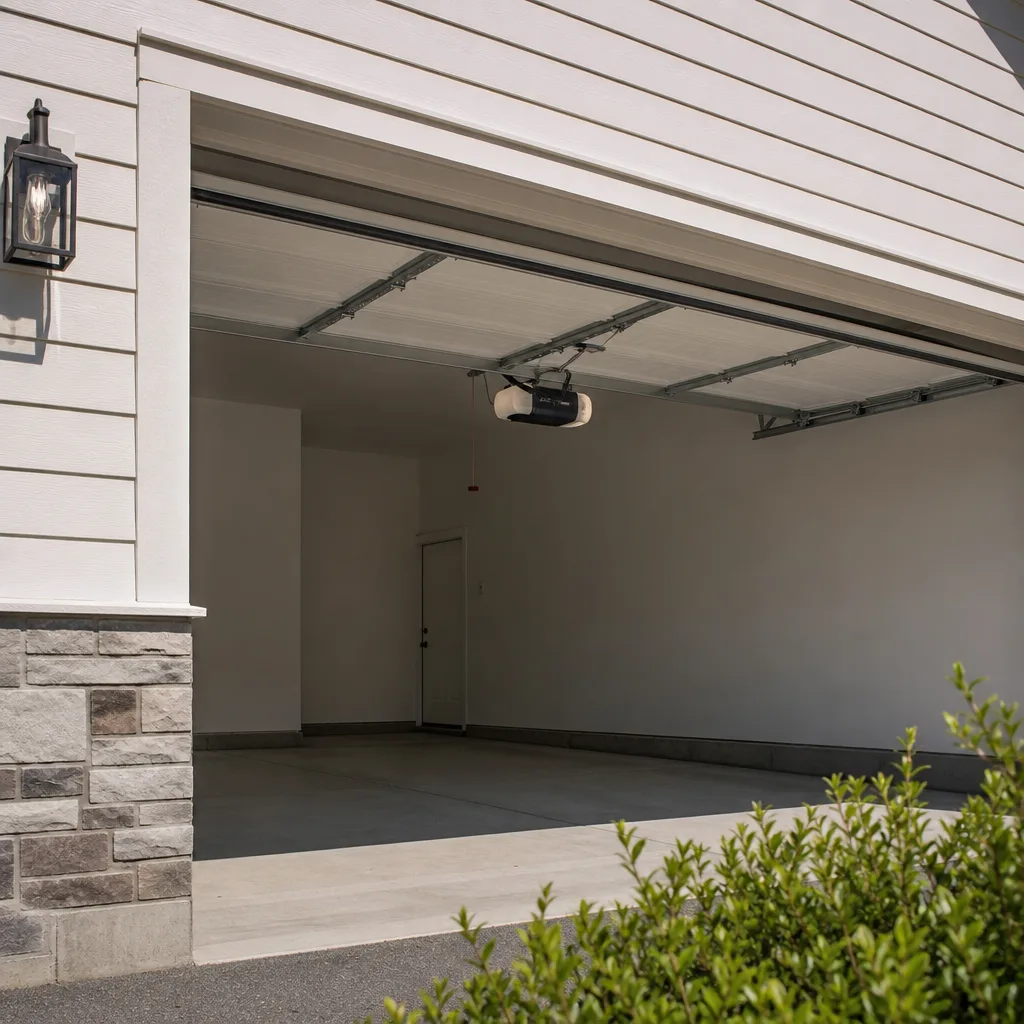
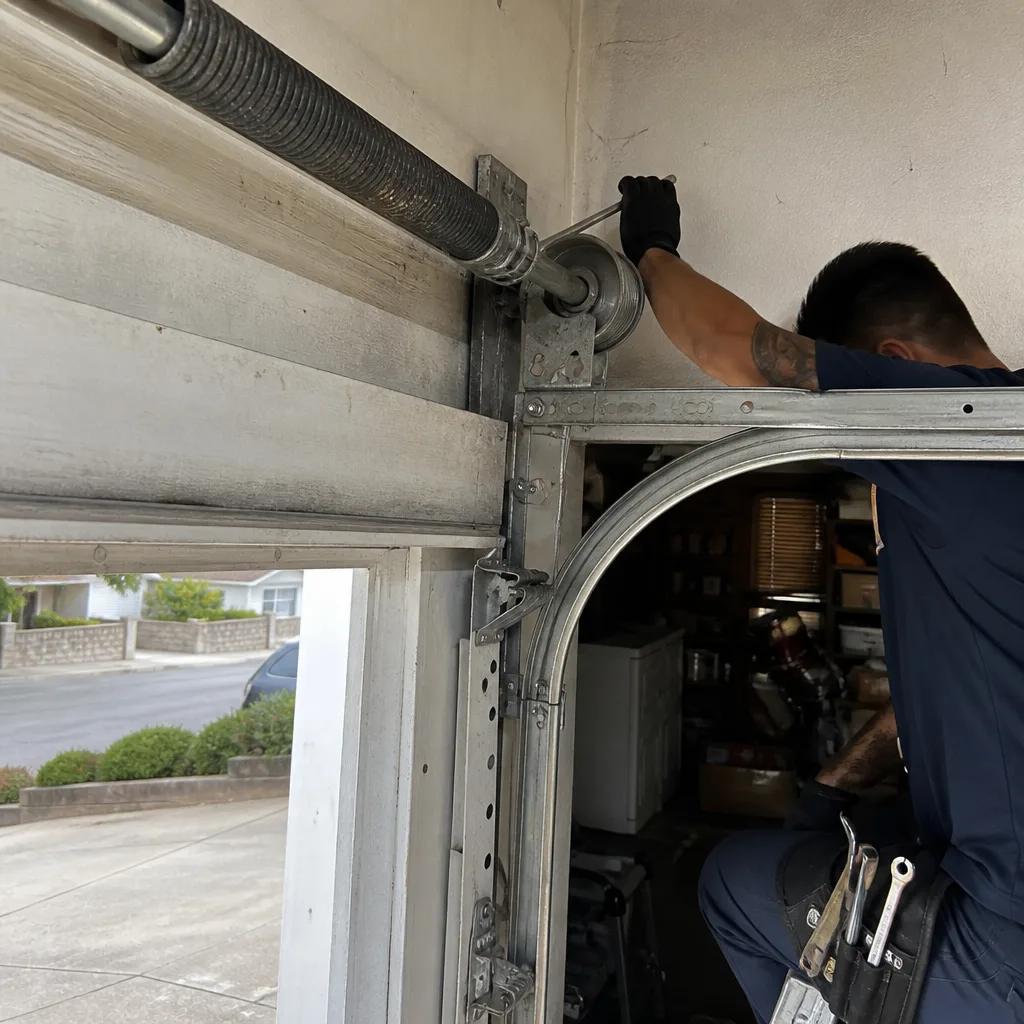 Before
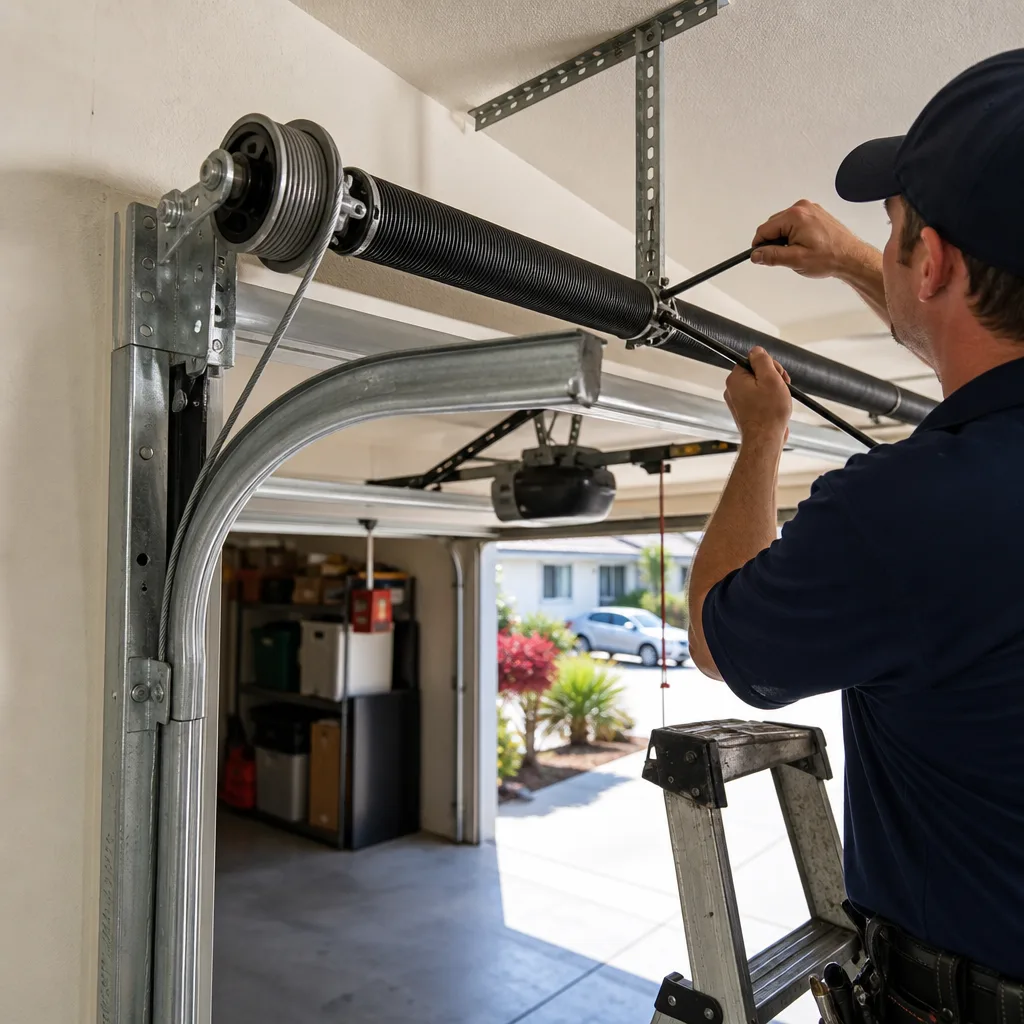 After
After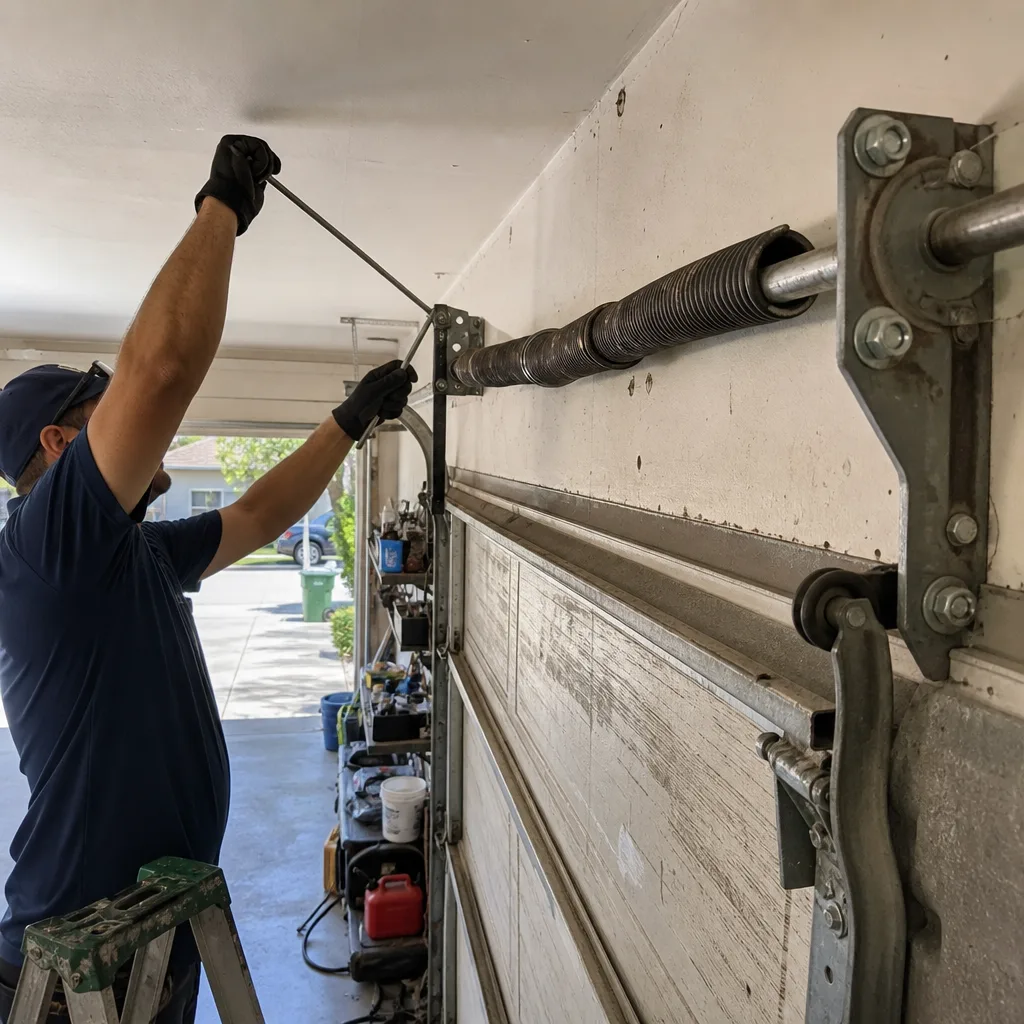 Before
 After
After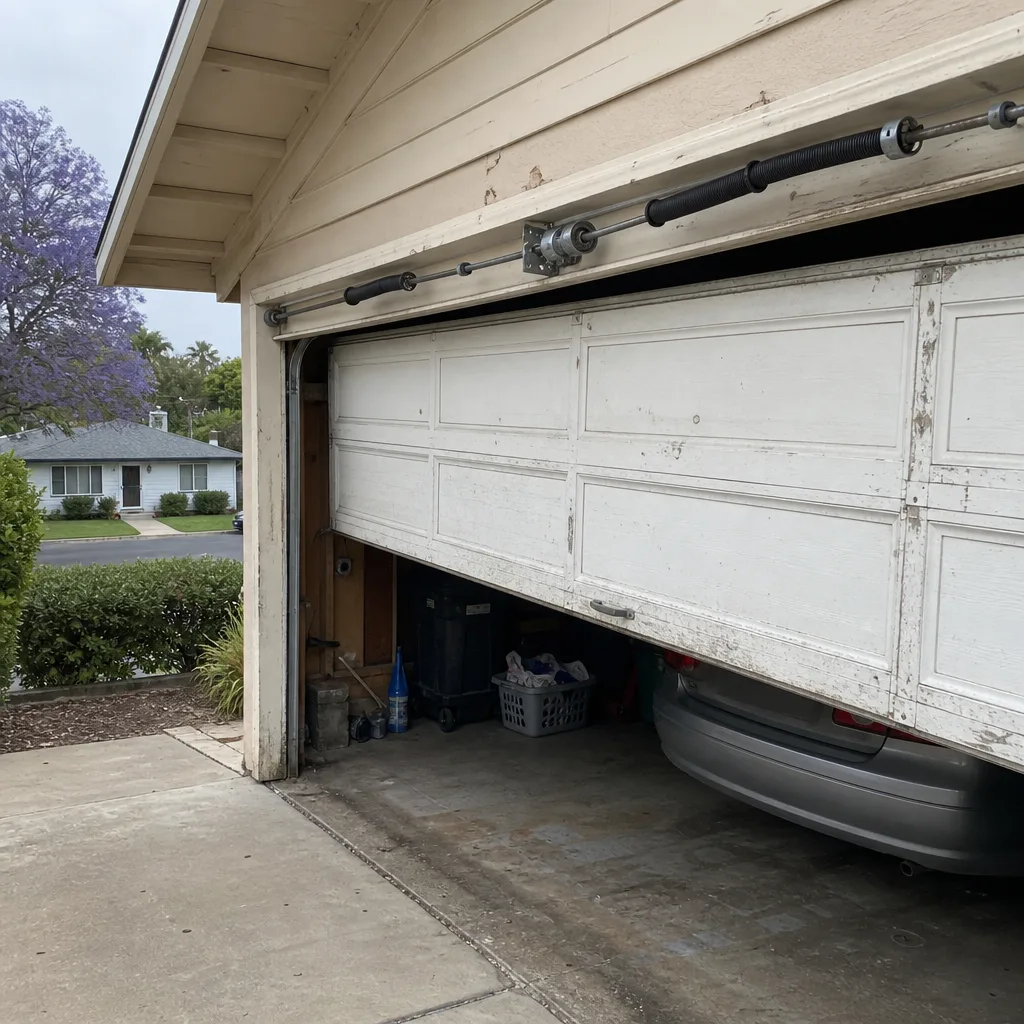 Before
 After
AfterDIY vs Professional Garage Door: The La Mesa Homeowner’s Decision Guide
Here’s a number most La Mesa homeowners never hear: a standard residential torsion spring carries between 100 and 150 pounds of torque per turn, and most springs are wound between 7 and 9 turns. That’s roughly 1,000 pounds of stored energy sitting above your head every time the door opens. Otto Reinhardt has been fixing garage doors in La Mesa since 2004, and he’ll be the first to tell you that some jobs on a garage door genuinely are weekend projects. Others will put you in the ER with a shattered wrist. This guide draws that line with specifics, not scare tactics, so you can make an honest call about what’s worth doing yourself and what’s worth a phone call.
Quick Answer
In La Mesa, the DIY vs. professional decision on garage doors comes down to one principle: tasks that don’t involve torsion can be safe DIY with basic tools, while anything touching a spring, cable drum, or bottom bracket under tension carries real injury risk and should be handled by a licensed pro. Weather seal replacement, sensor alignment, lubrication, and trolley release are all realistic homeowner projects. Torsion spring replacement, cable work, and bracket repairs are not. If you’re unsure which category your job falls into, call (619) 903-6668 and Otto will tell you straight, with no charge for the advice.
Table of Contents
- The Injury Risk Line: What No YouTube Video Can Teach You
- Safe DIY: Four Jobs Worth Doing Yourself
- Not DIY: Three Jobs That Can Hurt You or Your Home
- The California CSLB Rule: What It Means for Your Insurance
- How to Evaluate a Garage Door Repair Video Before Trusting It
- When “I’ll Just Do It Myself” Costs More Than Hiring Out
- Common Mistakes to Avoid
- When to Call a Professional
- Frequently Asked Questions
- The Bottom Line
The Injury Risk Line: What No YouTube Video Can Teach You
A door is 200 pounds riding on two springs. Respect it. That’s the sentence Otto uses when a La Mesa homeowner asks whether a repair is something they should attempt. The truth is that garage door injuries don’t happen the way people expect. They’re not dramatic, slow-motion failures. They’re fast. A winding bar slips while the spring is under load, and the cone spins backward at a speed your hand cannot outrun. The bar becomes a projectile. Fingers get trapped between the cable and drum. A bottom bracket lets go and the full weight of the door drops without warning.
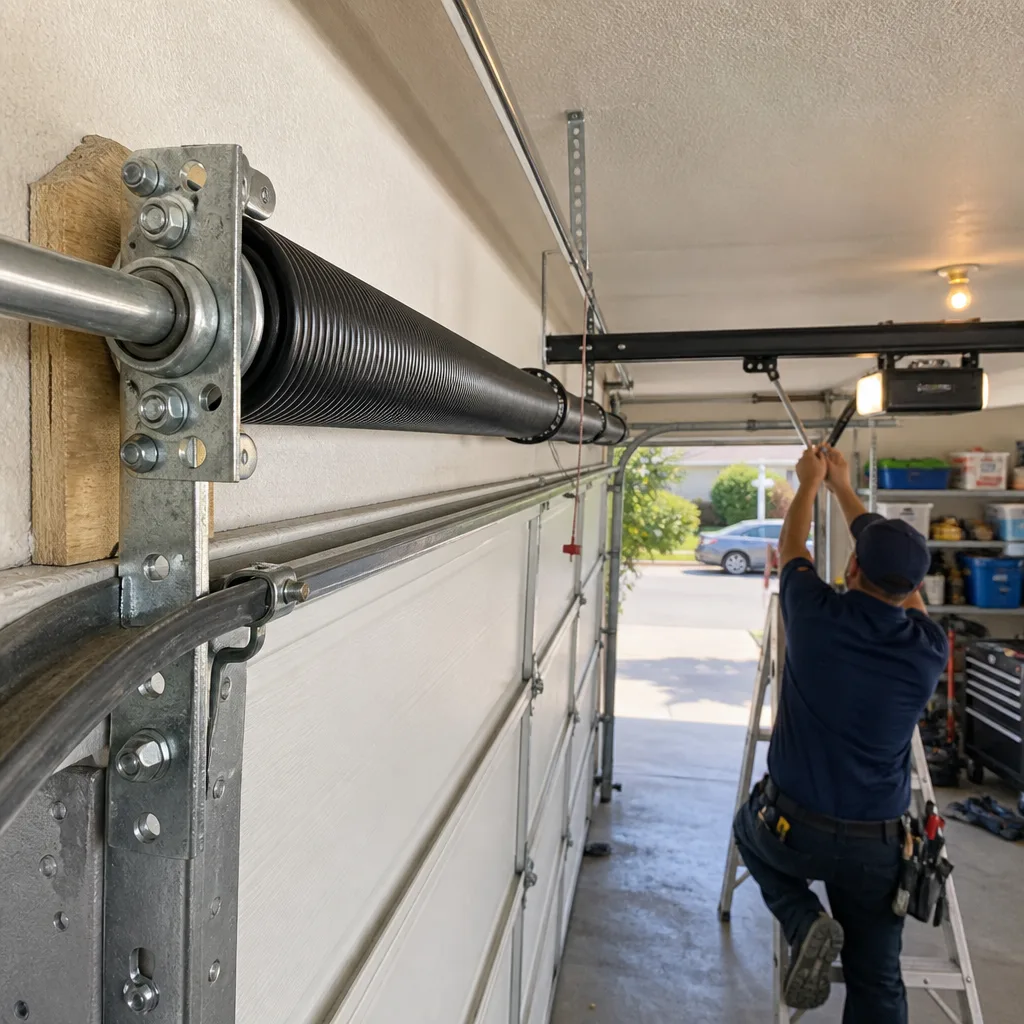
In our experience at Garage Door Repair in La Mesa, the homeowners who get hurt are rarely careless. They’re careful people who underestimated the stored energy in the system. A torsion spring doesn’t look dangerous when the door is up and the spring is unwound. It looks like a coiled piece of steel. But wound to tension, it’s a loaded weapon. That’s not dramatic language. That’s physics. The spring stores 100 pounds of force per turn, and you need to turn it 7 to 9 times to get a door balanced. One slip releases all of it at once.
The other thing no video communicates is the noise. When a spring breaks, it sounds like a gunshot. If you’re under the door when it goes, the door drops. Modern openers have safety mechanisms that slow the drop, but older La Mesa homes with original hardware may not. A 200-pound door falling from 7 feet hits with roughly 1,400 pounds of impact force at the floor. You don’t want any part of yourself under it.
So the line is this: if the job requires you to touch a spring, a cable, a drum, or a bottom bracket bolted to the vertical track, stop. That’s where injury risk stops being theoretical. Everything else, we’ll cover below.
Safe DIY: Four Jobs Worth Doing Yourself
Otto genuinely wants you to handle these yourself. Not because he doesn’t need the work, but because a homeowner who understands their door is a homeowner who catches small problems before they become big ones. These four jobs require nothing more than basic tools, thirty minutes, and the willingness to read the door’s manual.
- Weather seal replacement. The rubber strip on the bottom of your door hardens and cracks within a few seasons in La Mesa’s heat. When it goes, you get dust, bugs, and hot air under the door. The fix is simple: pull the old seal out of the aluminum retainer, slide the new one in, done. Seals cost $15 to $40 depending on the door width, and no special tools are needed. A pair of pliers helps pull the old one loose.
- Sensor alignment. If your door reverses when it tries to close, the likely cause is the photo-eye sensors near the floor on either side of the door. Check that both sensor lights are solid, not blinking. If one is blinking, gently adjust the sensor until the light steadies. Sometimes a leaf or cobweb is blocking the beam. Rarely, the bracket has been knocked slightly out of line. Loosen the wing nut, adjust the angle, retighten.
- Lubrication. A noisy door is often a dry one. Use white lithium grease on the hinges and roller stems, and a silicone spray on the springs. Do this every six months and you’ll extend the life of the moving parts. Do NOT use WD-40 on the tracks. It attracts dust and makes the problem worse. The tracks need no lubrication at all.
- Trolley carriage release. When the power goes out in a La Mesa heat wave and the opener won’t run, pull the red emergency release cord. The trolley disengages and the door operates manually. To re-engage, run the opener until the carriage clicks back into place. This is a designed-to-be-user-operated system, and there’s no safety risk if you do it with the door closed or fully open.
For any of these, if you’ve spent an hour and the door is still not right, stop and call. A door that half-functions is more dangerous than one that doesn’t function at all. Otto’s Otto’s Garage Door home crew can walk you through what you’re seeing before you commit to a service call, and the advice is free.
Not DIY: Three Jobs That Can Hurt You or Your Home
These are not “hard jobs” in the skill sense. An experienced technician can do each of them in under an hour. They are dangerous because the danger is invisible until the moment it isn’t. Here’s the honest list.
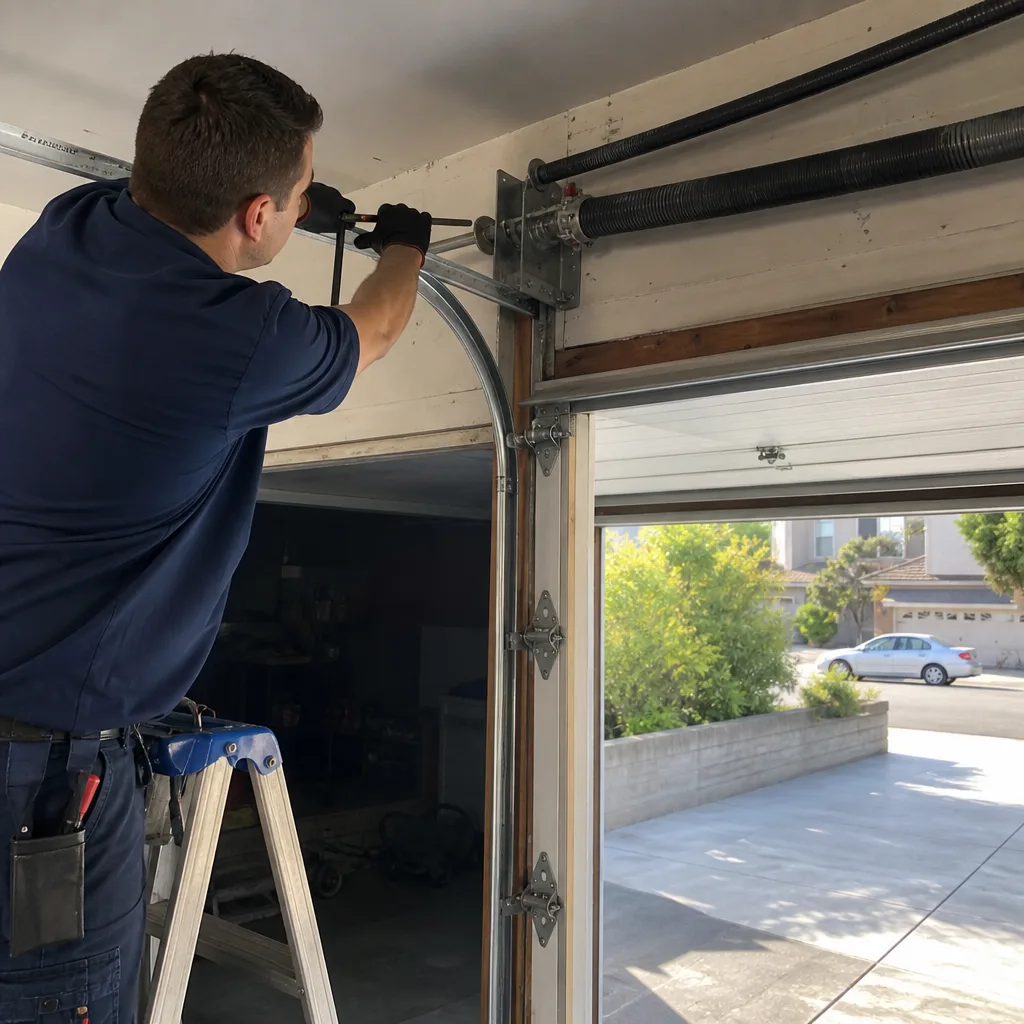
- Torsion spring replacement. This is the one people try most often, and the one Otto gets called to fix after the attempt goes sideways. The problem is the winding process. You need two solid steel winding bars, not screwdrivers or Allen wrenches. You need to know the spring’s wire size, inside diameter, and length. You need to count the turns exactly. You need to keep your body out of the line of fire when the spring is under tension, because if the bar slips, it’s coming at your face. A wrong spring size means the door isn’t balanced, the opener strains, and you burn through a $300 motor in 18 months. This is not a job you learn from a 12-minute video.
- Cable drum replacement or adjustment. The cables on either side of the door hold the tension that the spring creates. When a cable frays or jumps the drum, the door starts to hang crooked. The repair requires releasing the spring tension first, then re-tensioning after the cable is set. Releasing spring tension without the right bars and sequence is how broken fingers happen. The cable itself, under load, can cut through a glove and into a hand.
- Bottom brackets under tension. The bottom brackets at the corners of the door hold the cables. They are bolted to the bottom section and, on most doors, to the cable itself. When one fails, the fix means lifting the door to relieve tension, replacing the bracket, and re-setting everything. The danger is the same as the cable job: the spring’s energy is running through the exact part you’re touching. If the bottom bracket lets go while you’re working on it, the cable whips and the door drops.
Otto has repaired dozens of doors in La Mesa where a DIY attempt on one of these three jobs left the door worse than when the homeowner started, and twice he’s arrived to find an ambulance already there. He’ll tell you the same thing he told them: these specific tasks are the reason his license number is posted on his van. Some things aren’t worth learning the hard way.
The California CSLB Rule: What It Means for Your Insurance
Here’s the part most guides skip, and it matters in La Mesa because we’re in California and California enforces its garage door permits, codes & inspections more aggressively than almost anywhere. The Contractors State License Board requires a state-issued license for any construction-related work over $500, including labor and materials. Garage door spring replacement with labor typically lands between $180 and $340, so it’s under the threshold when done alone. But here’s the catch: if you perform the work yourself and something fails later, your homeowner’s insurance may deny the resulting damage claim.
The logic the insurance company uses is simple. They expect work performed on your home to meet the standard of a licensed professional. If you replaced a spring and the spring failed three months later, snapping the cable and dropping the door on your car, the adjuster will ask who installed the spring. When the answer is “I did,” they have grounds to classify the loss as faulty workmanship, which most policies exclude. The same job performed by a licensed contractor carries their liability insurance and warranty, which puts the financial risk on their shoulders, not yours.
This doesn’t mean you can’t legally do the safe DIY jobs listed above. You can. But for anything involving the spring system, hiring a licensed pro isn’t just about avoiding a trip to the ER. It’s about making sure your insurance policy actually covers you if the repair fails down the road. Otto’s crew is state-licensed and insured, and every job comes with the 90-Day Done Right Promise in writing. If something isn’t right, one call brings him back, no runaround.
How to Evaluate a Garage Door Repair Video Before Trusting It
Otto has watched hours of garage door tutorials on YouTube, partly to know what his La Mesa customers are seeing, and partly because he’s curious how other people explain the trade. Most of what’s out there is fine for maintenance tasks. Some of it is dangerous. Here are the three things a credible garage door tutorial will always show, and a bad one skips.
- A credible video shows the spring size being measured. A torsion spring is not one-size-fits-all. The correct replacement depends on the wire gauge, inside diameter, overall length, and the door’s weight. A real video will show the presenter measuring the old spring with a caliper or reading the color code, and cross-referencing it against a spring chart. A bad video says “just order a standard spring.” There is no standard spring.
- A credible video shows the presenter using two solid winding bars and keeping their body out of the winding path. Watch where the person’s hands and face are relative to the winding cone. A real technician stands to the side, works the bars from below the cone line, and never puts their head in the path of the bar. A bad video has the person working directly in front of the spring, using screwdrivers or hex keys, and often going too fast for you to see what they’re actually doing.
- A credible video tells you what to do when it goes wrong. A real technician will say, at some point, “if the bar slips, let go and get out of the way.” They explain that the door must be locked in the open position and the opener unplugged before any work starts. A bad video doesn’t mention failure modes at all, because the presenter has never experienced one.
If a video fails any of these three tests, close it. The information in it isn’t worth the risk. When in doubt, call Otto at (619) 903-6668 before you order parts. He’ll tell you if a job is realistic for a homeowner, and if it isn’t, he’ll tell you that too.
When “I’ll Just Do It Myself” Costs More Than Hiring Out
There’s a specific financial irony Otto sees a few times a month in La Mesa. A homeowner spends a weekend and $80 on parts trying to fix a garage door problem themselves. The door still doesn’t work right. He shows up and finds that the original diagnosis was wrong, the parts are now damaged from the failed attempt, and the actual repair costs more than it would have if he’d been called first. Here are the scenarios where DIY reliably costs more.
- Replacing the opener when the spring is broken. The door won’t open, so the homeowner assumes the opener motor is dead and buys a new one for $200 to $400. The opener was fine. The spring snapped. Now they have a new opener installed on a door that still won’t open, and Otto has to remove the new opener to replace the spring, then reset everything. The original spring replacement would have been under $300.
- Buying the wrong spring and installing it anyway. A door that’s over-sprung or under-sprung won’t stay put. It flies up or slams down. The opener strains, the cables jump, and eventually the door comes off the track. The repair at that point involves re-setting the door, possibly replacing bent track sections, and installing the correct springs. It’s $600 instead of $225.
- Stripping a winding cone with the wrong tool. This happens when someone tries to wind a spring with a screwdriver instead of a proper winding bar. The cone’s set screws strip, and the cone itself may be damaged. The spring has to be replaced again because a stripped cone can’t hold tension safely. That’s a second spring cost added to the bill.
- Ignoring the problem until the door falls off. The squeak or creak you’ve been hearing for eight months is a hinge or roller in its final stages. When it finally lets go, the door jams, bends the track, and sometimes pulls the opener rail out of the header. A $40 roller replacement you could have done yourself becomes a $500 track realignment and repair.
The common thread is misdiagnosis. Garage doors are simple machines, but they fail in interconnected ways, and a problem in one part often masquerades as a problem in another. If the opener is straining, the problem is almost never the opener. That’s an Otto rule, and it holds up. Before you spend money on parts, get the diagnosis right. For any Garage Door Opener in La Mesa issue, a phone call usually settles what’s actually wrong.
Common Mistakes to Avoid
- Lubricating the tracks. The tracks don’t need lubrication. Grease on the tracks collects dust and La Mesa’s fine desert grit, turning the track into sandpaper. Only the hinges, rollers, and springs need lube.
- Using the wrong tool to wind a spring. Screwdrivers, Allen wrenches, and pry bars are not winding bars. A proper winding bar is a solid steel rod, not hollow, that fits the cone’s sockets snugly. Using anything else is how the slipping happens.
- Working with the opener plugged in. Every garage door repair, even a minor adjustment, starts with unplugging the opener. A power surge or a malfunctioning wall button can cycle the door while your hands are inside the track.
- Adjusting the opener’s force settings to “fix” a heavy door. If the door is suddenly harder to lift, the cause is a worn spring or a binding roller. Turning up the opener’s force so it can muscle the door open hides the problem until the spring snaps or the opener burns out.
- Skipping the manual test after repairs. After any spring, cable, or balance work, the door should stay in place when raised halfway by hand. If it doesn’t, the springs are wrong and the setup is unsafe. A professional always tests this before considering the job done.
- Ignoring a fraying cable. A cable with a single broken strand is a cable about to fail. It’s under the same tension as the spring system, and when the remaining strands let go, the door slams down on whatever is in its path. Don’t watch a frayed cable and wait.
- Assuming your specific door matches the generic tutorial. La Mesa homes include everything from 1960s builds with original Wayne Dalton hardware to newer communities with Amarr and Raynor doors. Spring types, cable routing, and bracket designs vary by brand and era. A tutorial for a Craftsman setup won’t match your Raynor door, and the differences matter.
When to Call a Professional
Call a professional when the job touches a spring, a cable, a drum, or any bracket under tension. Call if the door is making a sound you can’t identify and it’s getting worse. Call if the door is off balance, sagging on one side, or jerking during travel. Call if you’ve already tried a repair and the door is worse than when you started. Call if you’re not sure, because the call is free and the answer is honest. Otto’s Garage Door offers free estimates in La Mesa, and Otto himself answers the phone more often than not. His number is (619) 903-6668. He’ll tell you if it’s a job you can handle, and if it’s one you can’t, he’ll tell you that plainly and stand behind the work with the 90-Day Done Right Promise.
Frequently Asked Questions
Spring replacement in La Mesa typically runs $180 to $340 for a standard single torsion spring, with two-spring setups running higher depending on the door’s weight and brand-see our full Garage Door Cost Breakdown for La Mesa for 2026 pricing details. The final price depends on the spring size, which Otto determines by measuring the wire gauge, inside diameter, and length. Call (619) 903-6668 for an exact quote, and the number he gives you on the phone is the number on the invoice.
Otto strongly advises against it, and not because he wants the job. A torsion spring under load carries enough stored energy to break bones or worse if a winding bar slips, and the correct spring requires precise measurement, not guesswork. The risk of injury combined with the risk of installing the wrong spring makes this the one task with no realistic safe DIY version.
In La Mesa’s dry, dusty climate, the two most important seasonal tasks-covered in our Garage Door Repair Maintenance Checklist for La Mesa Homeowners-are lubricating the hinges, rollers, and springs every six months, and checking the bottom weather seal before summer heat arrives. A torn seal lets hot air and dust in, and a dry roller grinds against the track. Both are easy DIY jobs requiring under an hour.
In most cases, no. If a spring you installed yourself fails and damages your car or home, the insurer can classify the loss as faulty workmanship, which standard policies exclude. A licensed contractor’s work carries their liability coverage and warranty instead. This is a significant financial reason to leave spring work to a pro.
Look at the spring for a gap in the coil, which means it has already snapped. If the door feels suddenly heavy when opened manually, the spring is losing tension and close to failure. A spring’s lifespan is measured in cycles, typically 10,000, which translates to 10 to 15 years of normal use in La Mesa. If your spring is over a decade old, expect to replace it soon.
Yes. Otto quotes the job on the phone and holds that price when he arrives. There’s no charge for the visit inside La Mesa’s home county, and if you already have a written estimate from a competitor, Otto will provide a free second opinion. Call (619) 903-6668 and you’ll talk to a live person, often Otto himself.
The Bottom Line
The DIY versus pro decision on a garage door is not a test of your handiness. It’s about recognizing which parts of the system are designed to hurt you and which are genuinely user-serviceable. A weather seal, a sensor, a can of lube: handle those yourself with our more guides & resources, and you’ll save money and learn your door. A spring, a cable, a bracket under load: call someone with the license, the insurance, and the experience, because the downside of getting it wrong is measured in broken bones and insurance denials, not just wasted weekends. Otto Reinhardt and his crew have been keeping La Mesa’s garage doors running since 2004, and they’ll give you a straight answer either way. One call to (619) 903-6668 settles the question. And remember: a door is 200 pounds riding on two springs. Respect it.
Written by Otto Reinhardt, Owner at Otto’s Garage Door, serving La Mesa since 2004.