
Full 25-point door and opener safety check with every visit - springs, cables, rollers, tracks, and your LiftMaster or Chamberlain opener included
You get a price before we start. It does not change when the truck arrives.

 Before
 After
After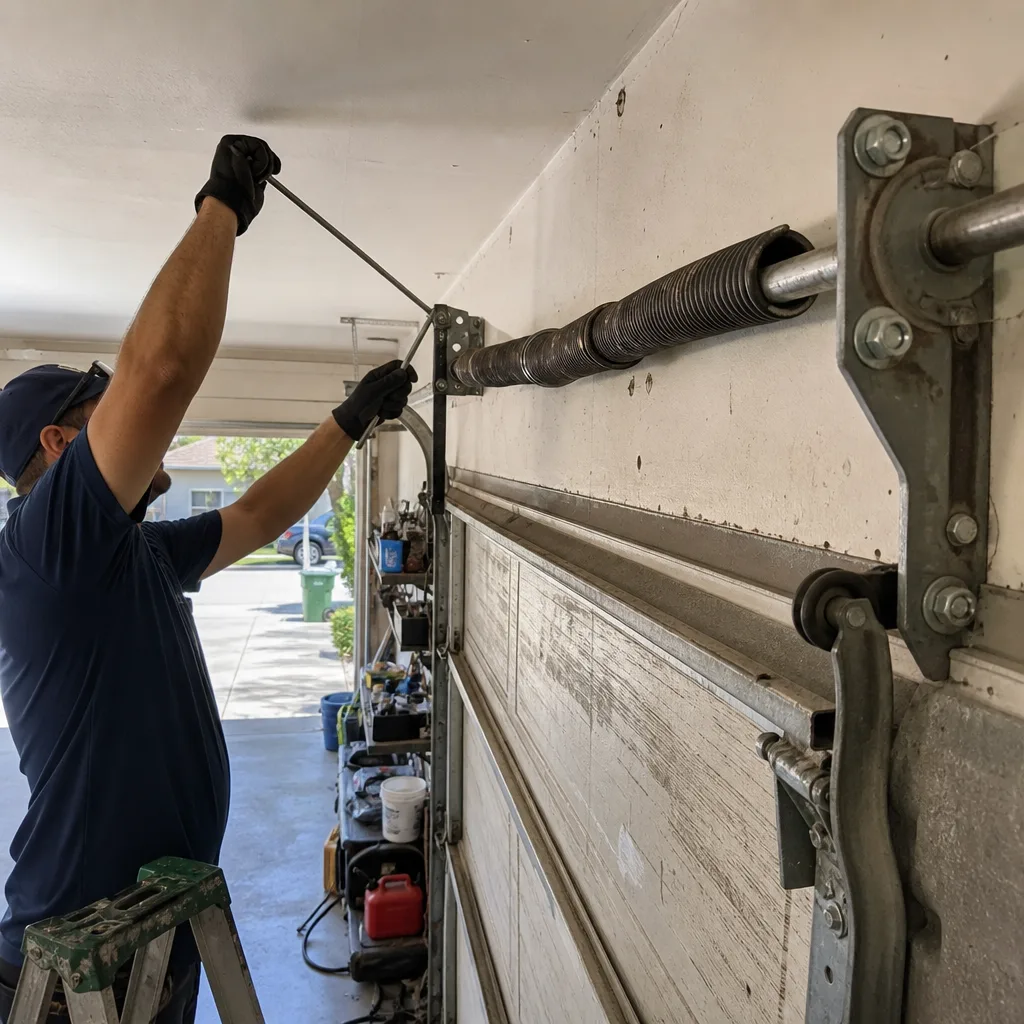 Before
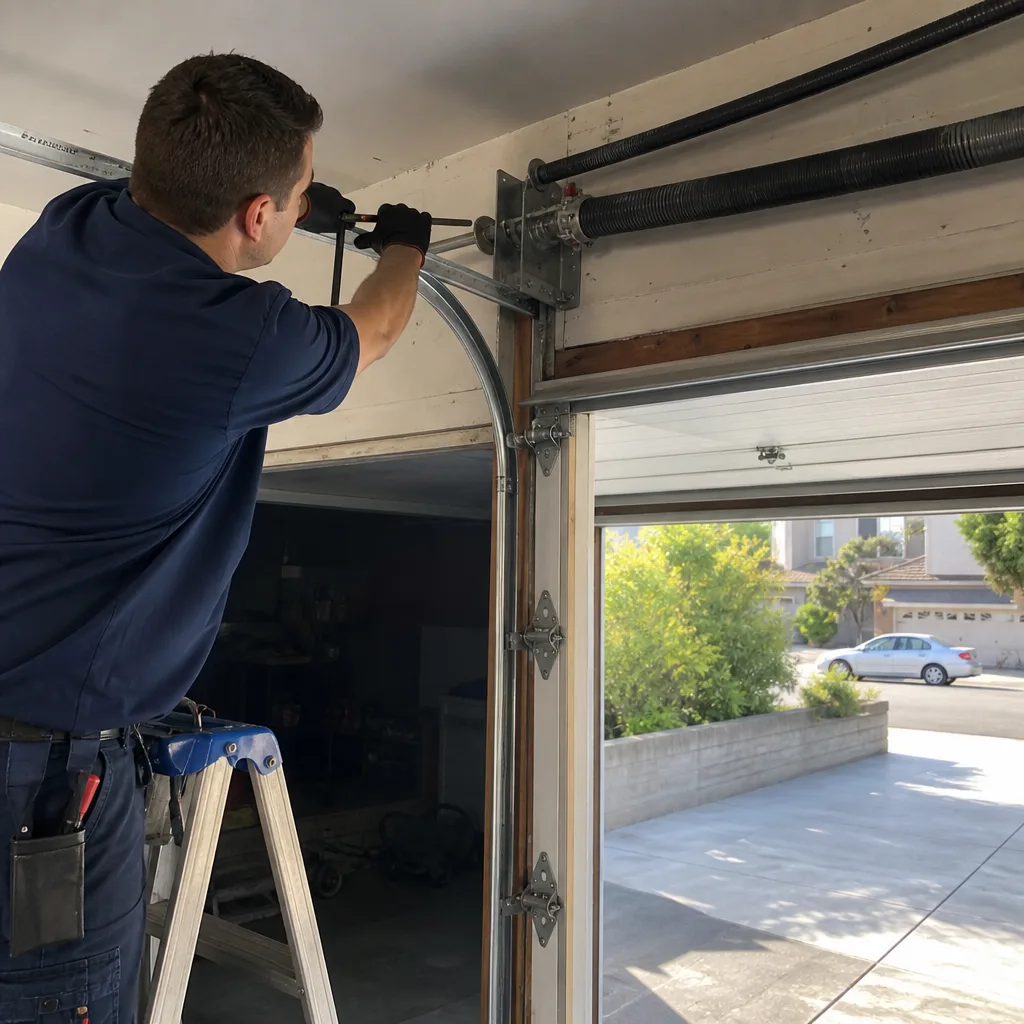 After
After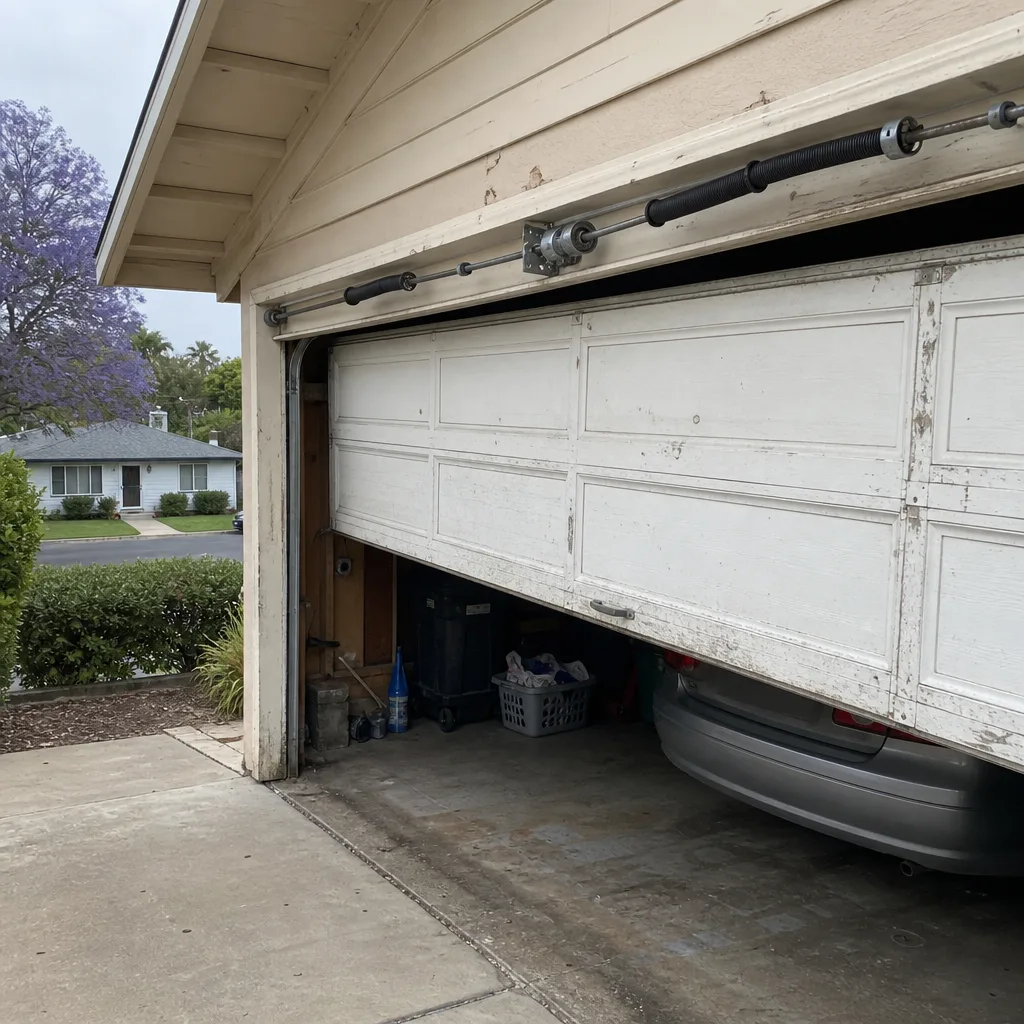 Before
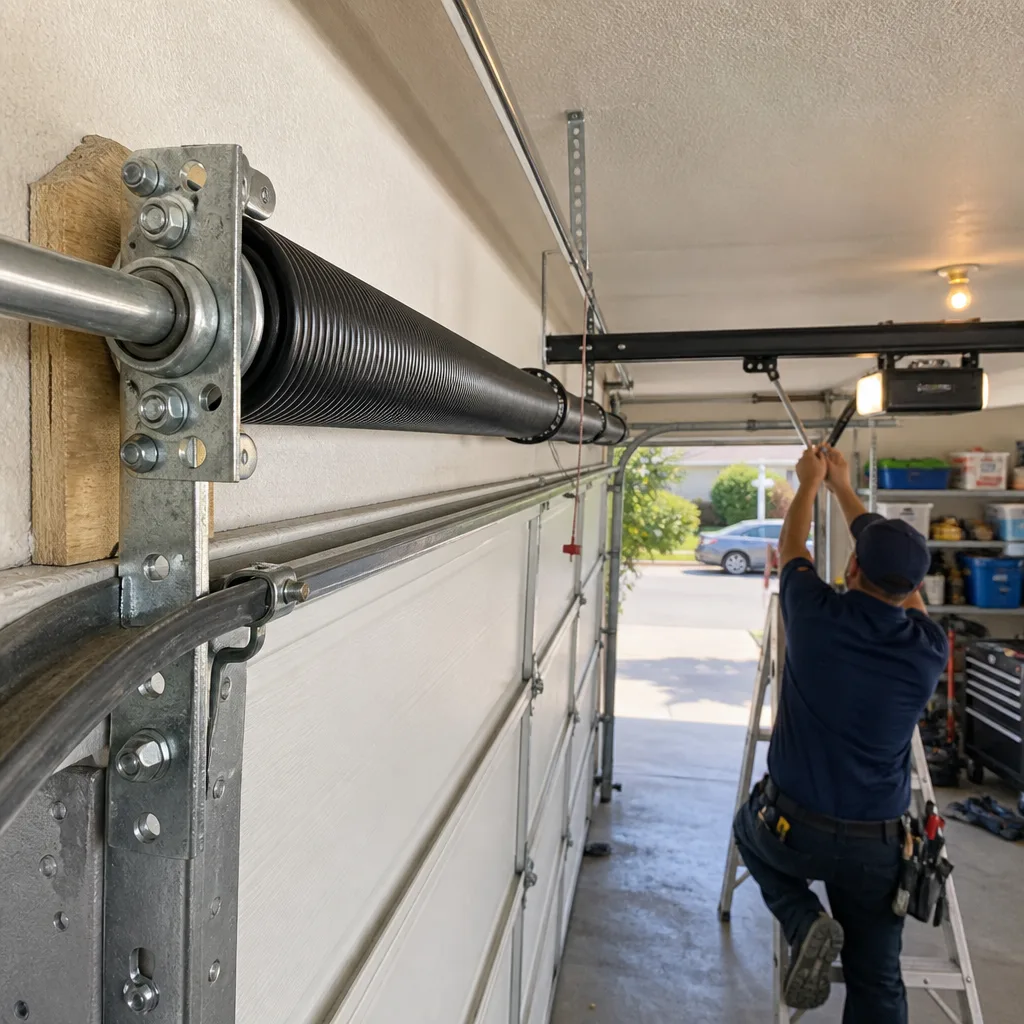 After
AfterGenie Torsion Spring Replacement: The La Mesa Owner’s Guide
We stock and install Genie-compatible torsion springs across La Mesa, and a typical replacement runs between $180 and $340 installed, parts and labor included. Most jobs are done same-day when you call before early afternoon, because this is one spring system we keep on the truck. The way most La Mesa homeowners discover their spring has failed is a door that won’t budge, or a bang from the garage that sounded like a gunshot – usually right as the opener strained against a broken coil.
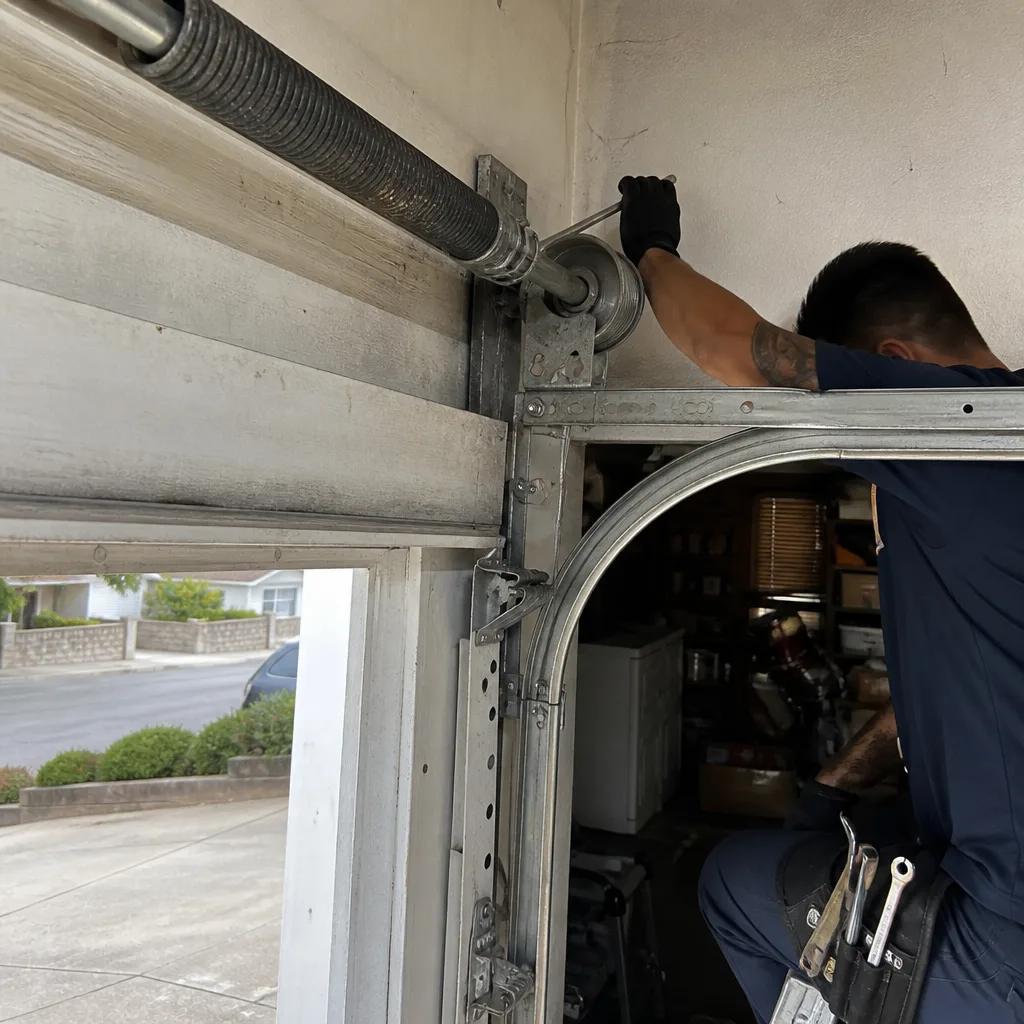
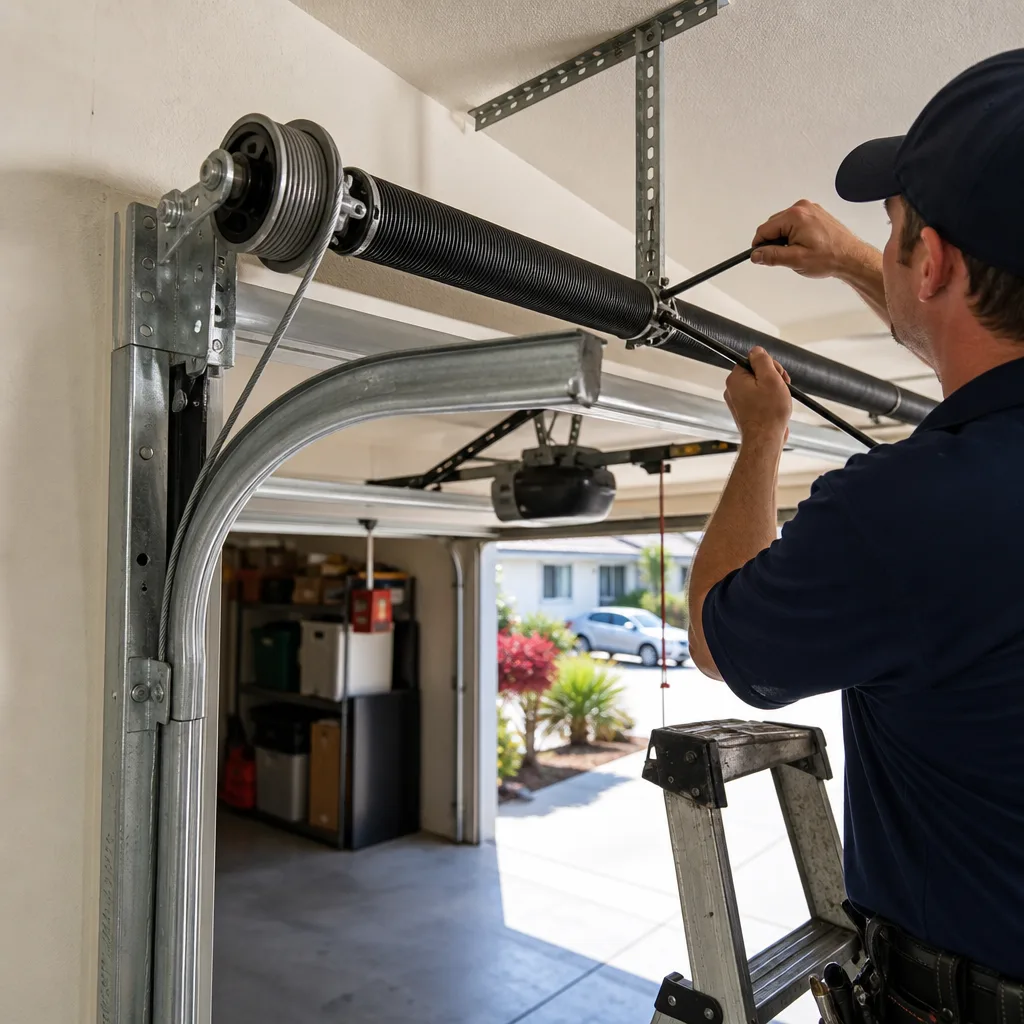
A Genie door rides on a torsion spring system mounted above the opening, not the extension springs you’ll find on older hardware. When that spring snaps, the door becomes dead weight. Two hundred pounds of it. We replace the spring in pairs because the surviving one is the same age and has cycled the same number of times. If one went, the other is weeks behind it.
Which Genie Models This Applies To
Genie builds more than one torsion setup, and this is where compatibility actually matters. The IntelliG series, ReliaG series, and older ProMax models all use a standard torsion tube with either a single spring or a pair, depending on door width and weight. What trips people up: Genie has used both Lawson-style and TorqueMaster-style assemblies over the years, and they are not interchangeable. A TorqueMaster hides the spring inside a tube and uses a very different winding system than an open torsion spring on a shaft.
If your door has exposed springs on a metal bar above the opening, you have a standard torsion setup and we can match it. If the spring is inside a tube and you can’t see coils, that’s a TorqueMaster, and we handle those too, but the parts are different and the job takes a little longer. The quickest way to know what you have: snap a photo of the spring area with your phone and text it to us before calling. Otto Reinhardt has been running calls across La Mesa long enough that he can usually tell you the part and the price from one picture.
For OEM versus aftermarket: Genie-branded springs are fine parts, but we almost always install a US-made aftermarket spring matched to the exact wire size, inside diameter, and length of the original. The aftermarket options are consistently the same steel quality at 20 to 40 percent less than Genie’s part number for the identical spec. We’re an independent shop – no affiliation with Genie, no kickback from their parts warehouse – so we tell you straight when the aftermarket spring is the smarter spend.
Signs Your Genie Torsion Spring Replacement Is Failing
- A door that opens a few inches and stops. The spring is carrying less than half its rated load, and the opener’s safety logic is reading the strain and shutting down. The spring hasn’t snapped yet, but it’s lost tension through coil fatigue.
- A visible gap in the coil. If you look up and see a clean break with a gap of an inch or more between coil segments, that’s a snapped spring. This is the final stage, not an early warning.
- The door drops fast when closing. A healthy Genie torsion spring controls the descent so the door settles gently. When the spring weakens, the door starts to fall faster than it should, and that puts extra shock on cables, hinges, and the panel joints.
- A heavy door when you pull the manual release. Pull the red handle and try lifting the door by hand. It should feel like lifting 8 to 15 pounds, not wrestling a refrigerator. A door that’s genuinely heavy is a spring that’s done.
- Crooked travel. When one of a pair of springs breaks and the other holds, the door wants to ride up on one side and bind. You’ll hear it scraping the track or see the door sit uneven at the bottom.
None of these are opener problems. That’s the thing we repeat most on La Mesa service calls. The opener gets blamed because it’s the part that makes noise, but the spring does the actual lifting. If the opener is straining, the problem is almost never the opener.
Replacement Cost & What’s Included
Across La Mesa, Genie torsion spring replacement runs $180 to $340 installed. The spread depends on three things: whether you have one spring or two, the wire size and length required for your door weight, and whether we’re also replacing cables or a bearing plate that the snap took out with it. A single lightweight spring on a 7-foot door might land near $190. A double-spring setup on a heavy 8-foot insulated door can run to $300 or more.
| Job | Typical La Mesa Price |
|---|---|
| Single torsion spring, standard door | $180 - $230 |
| Pair of torsion springs, standard door | $230 - $310 |
| Pair of springs plus cables | $260 - $340 |
Every quote covers the springs, labor, winding and balancing, a full cycle test, and our 90-Day Done Right Promise in writing. You approve the number before we touch a wrench – the price we quote on the phone is the price on the invoice when we finish. That hasn’t changed since 2004, and it’s not going to.
DIY or Call Us?
A door is 200 pounds riding on two springs. Respect it. We say this as plainly as we know how: torsion springs hold enough stored energy to break bones or worse if they let go while you’re winding them. This is one of the few garage door jobs where we actively ask homeowners to leave it to a trained person.
What you can safely do: check for a visible gap in the coil, pull the release handle and try lifting the door to feel its weight, and check whether the door is sitting level. That’s diagnosis. The actual spring swap requires unwinding and rewinding under tension, and getting that wrong is how people end up in the emergency room. We’ve been doing Genie spring replacements in La Mesa for over twenty years. Call us at (619) 903-6668, tell us what’s happening, and we’ll have a number for you on that call.
FAQs
Most Genie torsion springs are rated somewhere around 10,000 cycles, which in a typical La Mesa home works out to 7 to 10 years of normal daily use. If you use the door as your main entrance – coming and going four or five times a day – that lifespan shrinks. We count spring cycles the way you count tire miles, and we’ll tell you what’s left on yours. Later, you can upgrade to a higher-cycle spring when the time comes, which isn’t much more money for roughly double the life.
Broken springs are replaced, never repaired. Once the coil snaps, that steel is done – there’s no welding, splicing, or re-connecting a torsion spring that holds this kind of load. We replace both springs on a paired system so the door lifts evenly and you’re not back in the same spot next month. A single new spring on a two-spring door is a half-fix that costs more in the long run.
A standard Genie torsion spring swap takes 45 to 90 minutes once we’re on site, including winding, balancing, and a test cycle. If we’re also replacing cables or the bearing plate, figure closer to two hours. Since we stock common Genie spring sizes on the truck across La Mesa, most jobs are one visit, not a diagnostic trip plus a follow-up.
We carry the common wire sizes and inside diameters for Genie residential doors on the truck, so most La Mesa calls are same-day. If you have an uncommon spring spec – an oversized door, a custom wind rating – we can usually source it by the next morning through our local suppliers. We also keep LiftMaster and Chamberlain parts on hand for when the opener needs attention on the same visit.
Written by Otto Reinhardt, Owner, Otto’s Garage Door - La Mesa, CA at Otto’s Garage Door, serving La Mesa and nearby areas.